For homeowners comparing similar remodels, this is where the budget and schedule start to make sense: rough-in, waterproofing, sequencing, and the hidden work that protects the finished room.
This Laurelhurst primary bathroom was completed in January 2025 for approximately $67,000 on a five-week schedule. The scope is intentionally heavy on systems: major plumbing relocation, permitted window additions, a wet-room layout with both a freestanding tub and a walk-in shower, wallpaper-forward walls, and a pocket door. Those items do not photograph equally, but they explain the budget as clearly as the marble hex floors and brass fixtures.
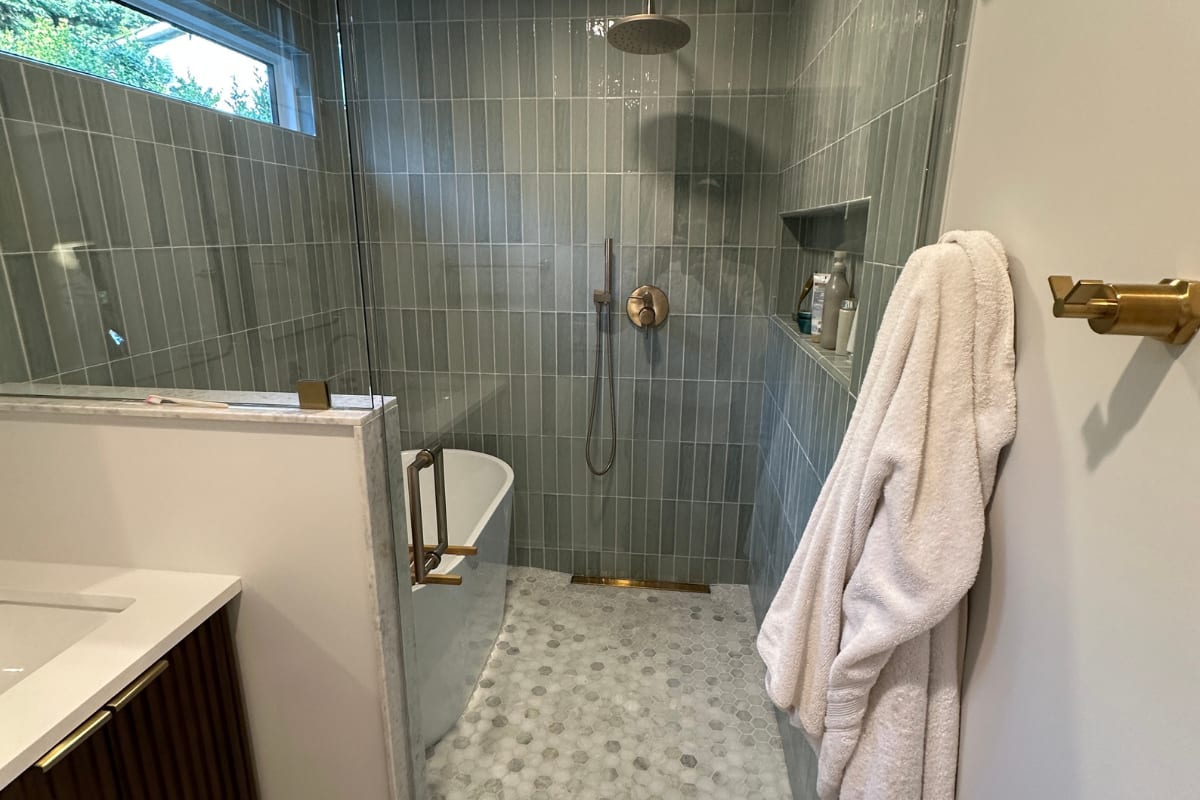
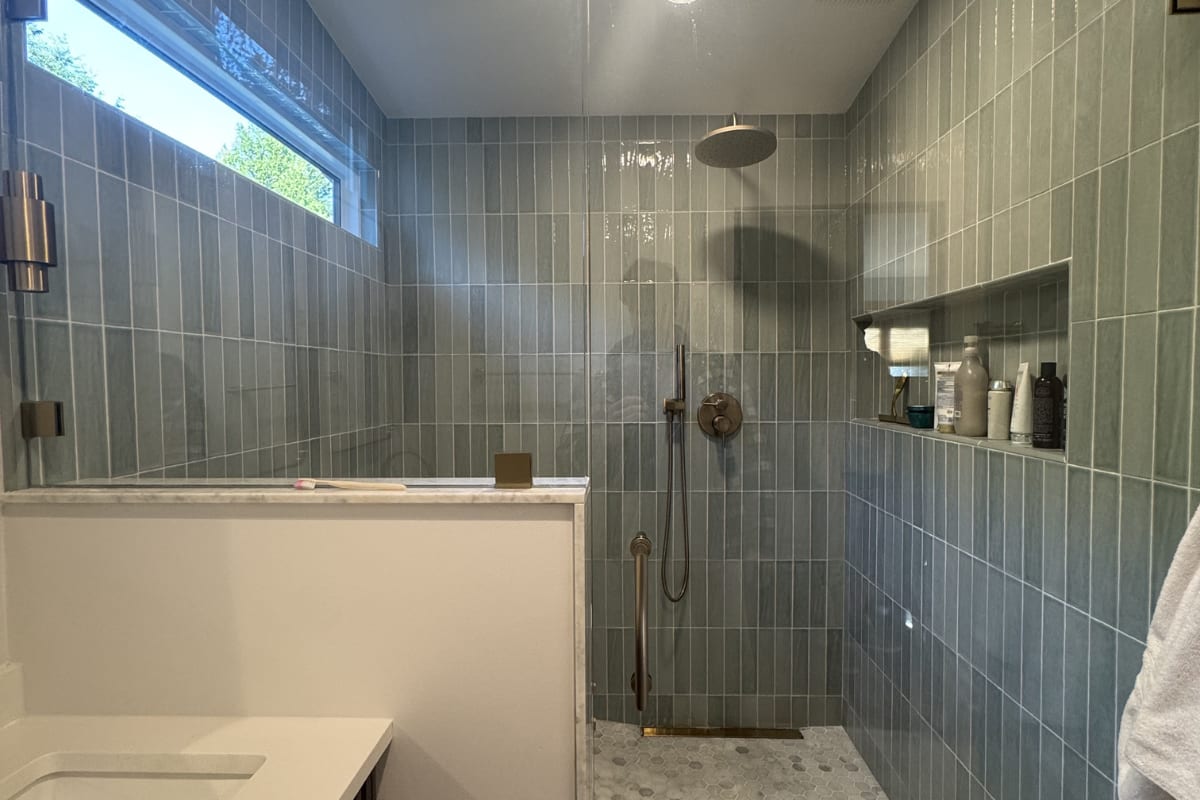
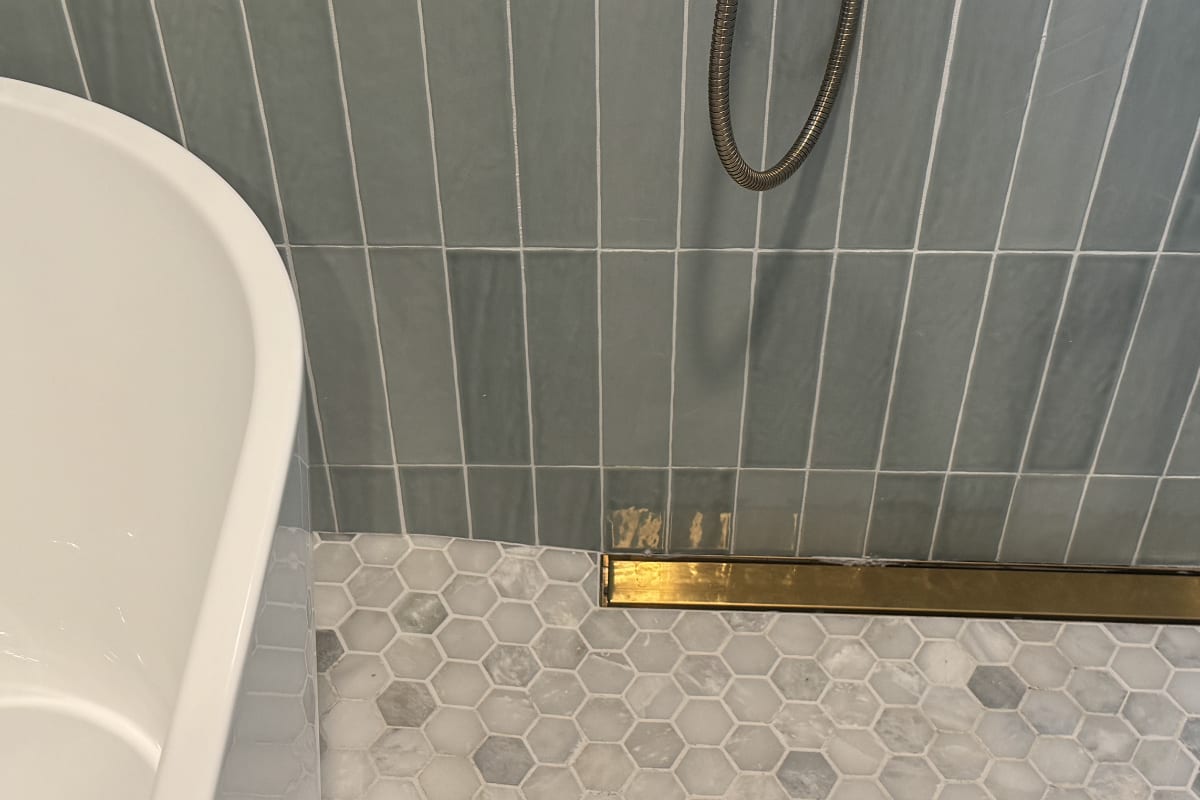
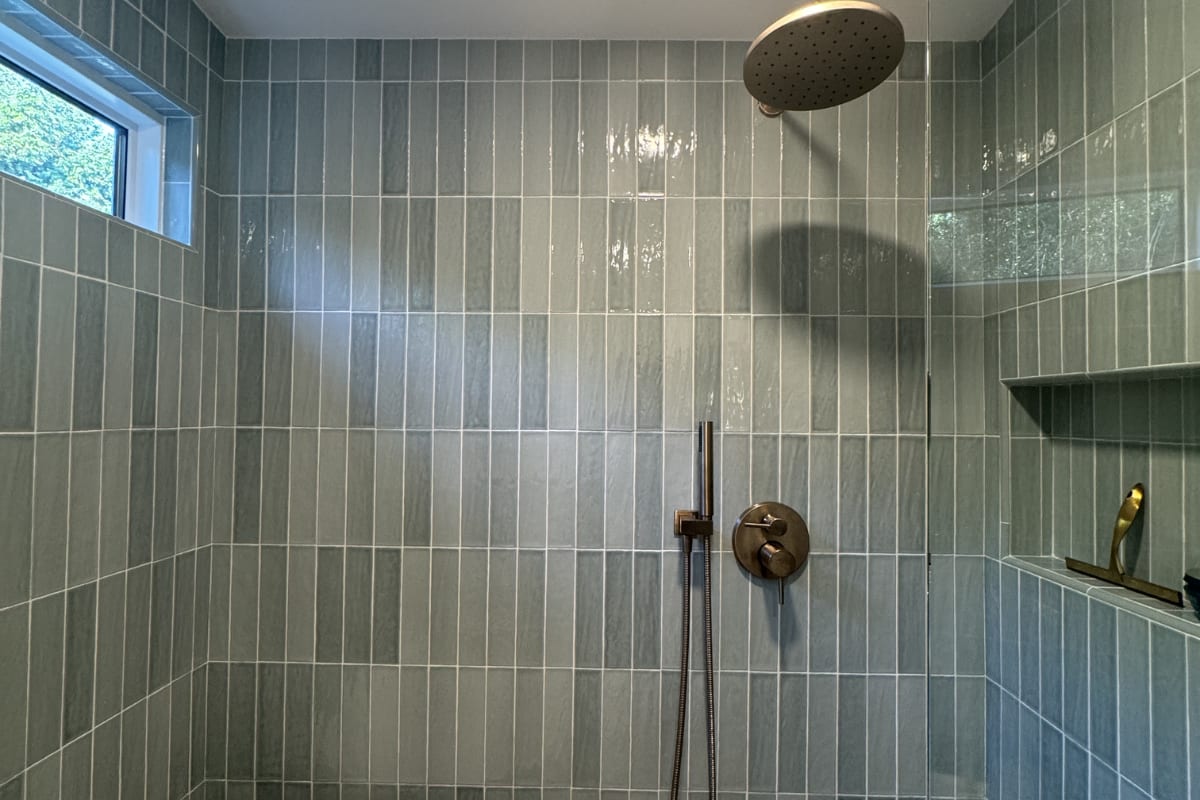
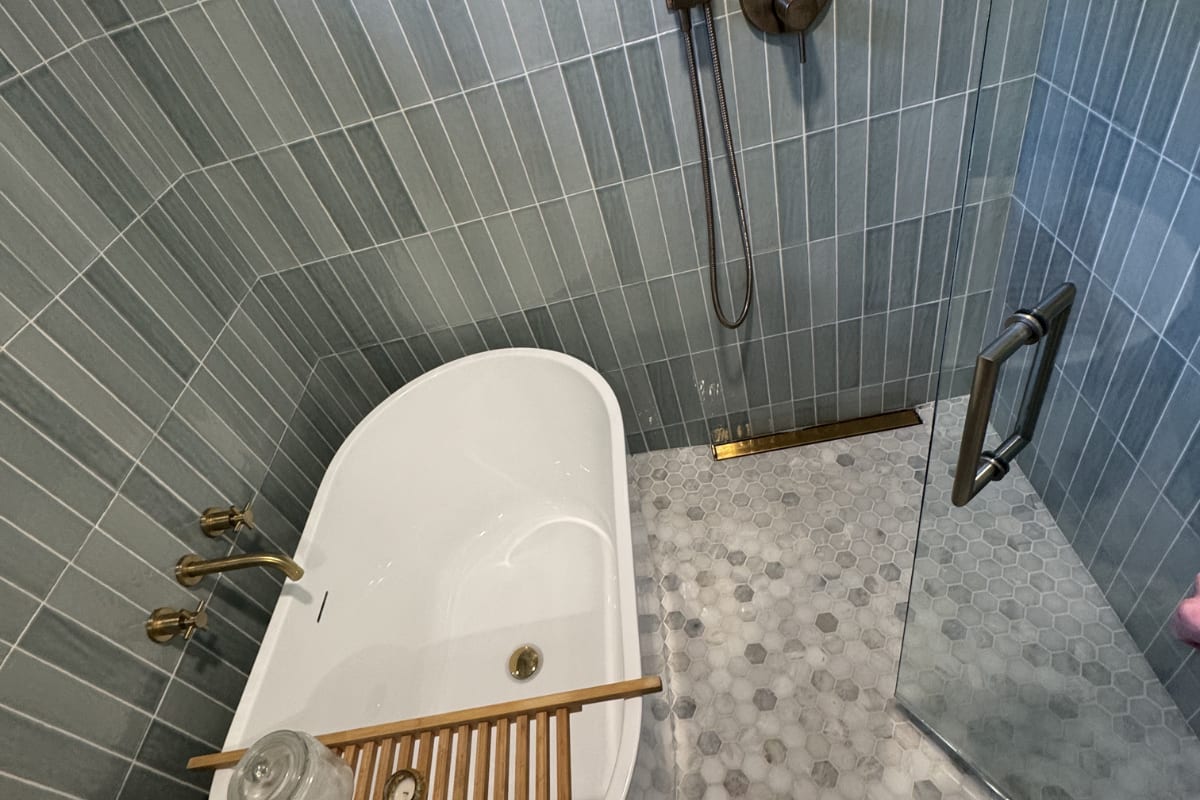
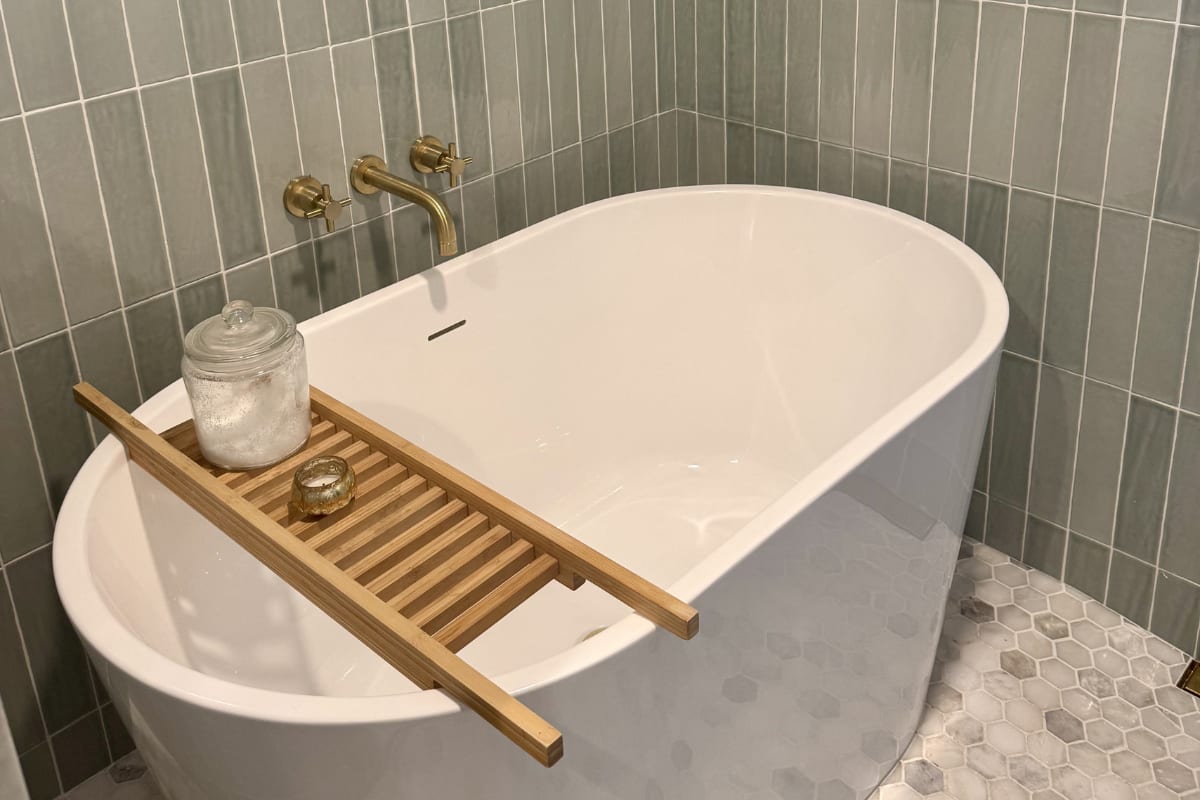
The wet zone behaves like a single waterproof shell even though it contains two focal fixtures. A freestanding oval soaking tub sits adjacent to a walk-in shower area that uses vertically stacked handmade-look subway tile in muted sage and blue-gray fields, white grout, and marble-look hex mosaic at the floor. A brass linear drain reinforces the curbless or low-curb intent: water management needs reliable slope, a correctly embedded drain body, and a waterproofing membrane continuity plan that does not stop at the glass line.
The shower includes a ceiling-mounted rain head, a handheld wand on a vertical bar, and a long recessed niche sized for real bottles rather than a token shelf. Frameless glass lands on a knee wall capped with stone or quartz, which is a practical way to stabilize glass without channel clutter. Glass measurement happens late, after tile planes and hardware heights are firm.
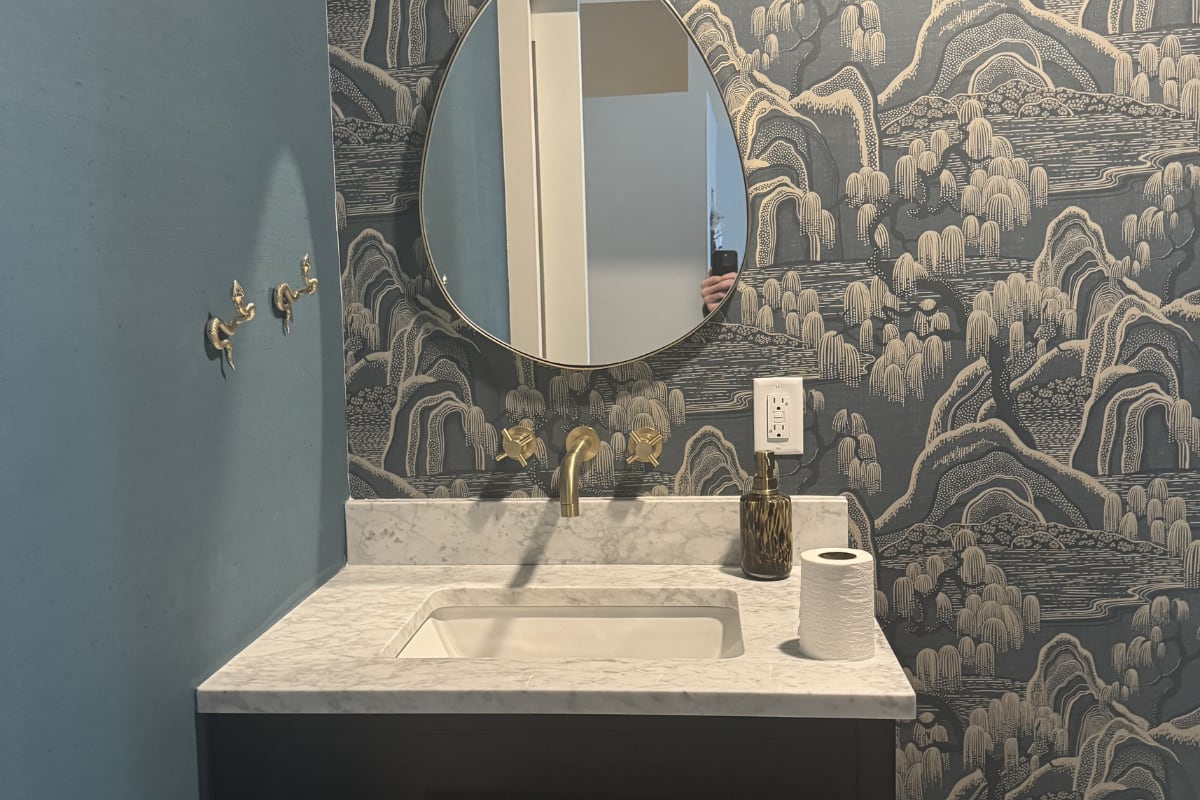
When homeowners ask for a different tub location, a linear drain layout, or wall-mount faucets, the conversation is not cosmetic. Drain paths, venting, and supply routing may need to move through framing spaces that were never designed for today’s fixture geometry. That is why this project highlights permitted plumbing work: the outcome must be inspection-ready, quiet, and serviceable. Wall-mount tub fillers and lavatory faucets require blocking and depth discipline so valves land where tile and wallpaper expect them.
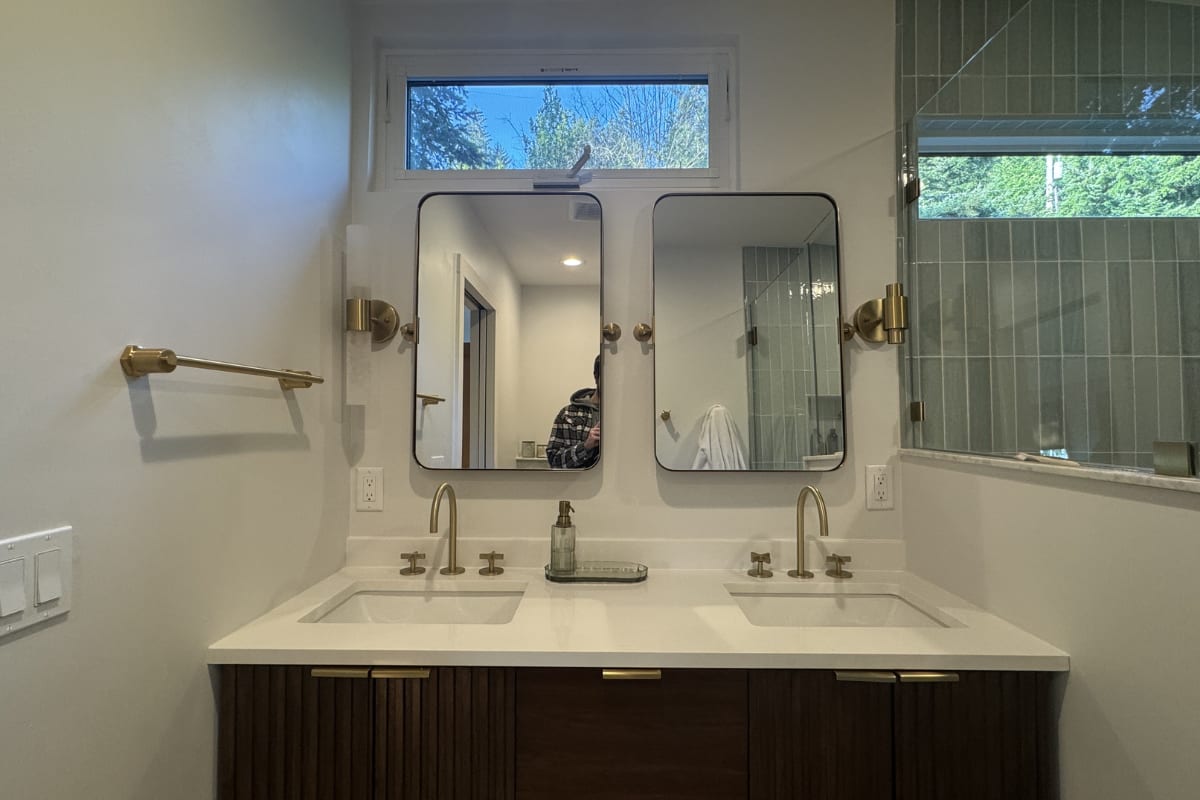
New horizontal transom-style windows appear at the shower wall and above the vanity mirror wall. Added glazing improves daylight and reduces the cave effect common in older Seattle bathrooms, but it also triggers envelope detailing: sill flashing, integration with WRB, interior tile returns at jambs, and tempered glazing where code places glass adjacent to tubs and showers. Those steps belong in the plan before tile starts, not after a rough opening is guessed.
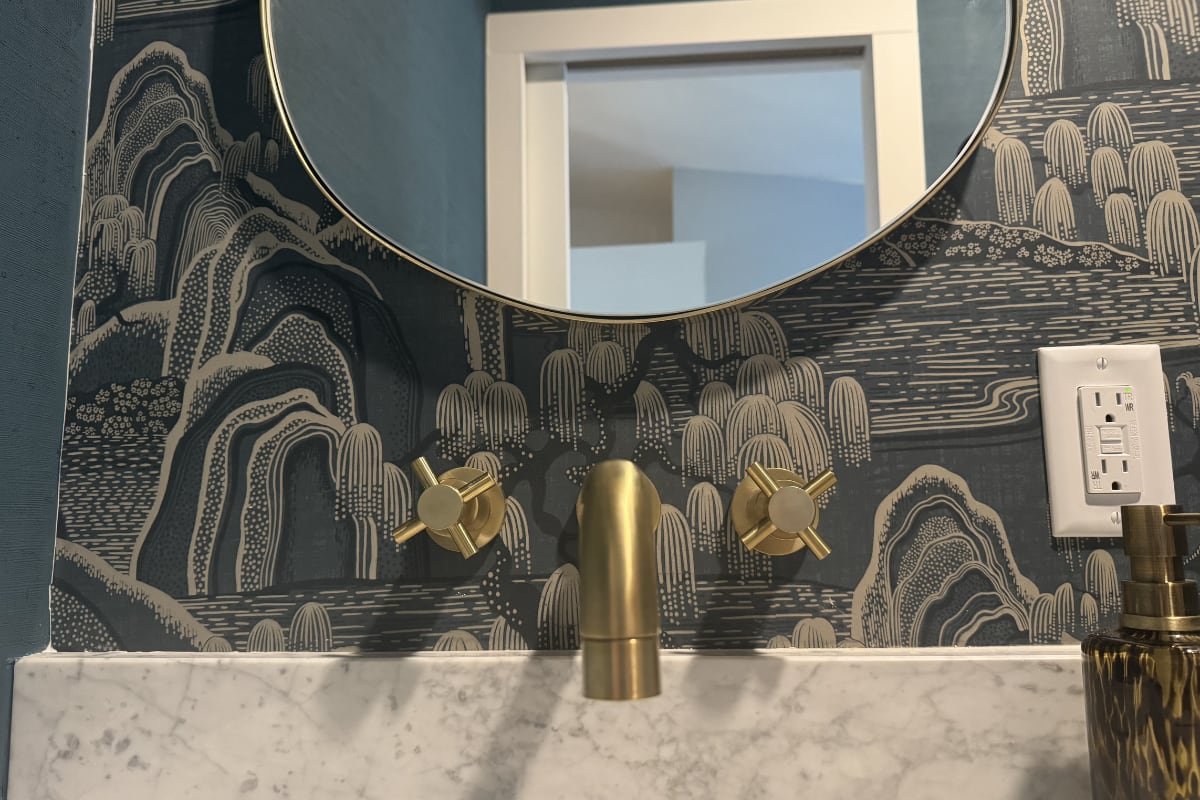
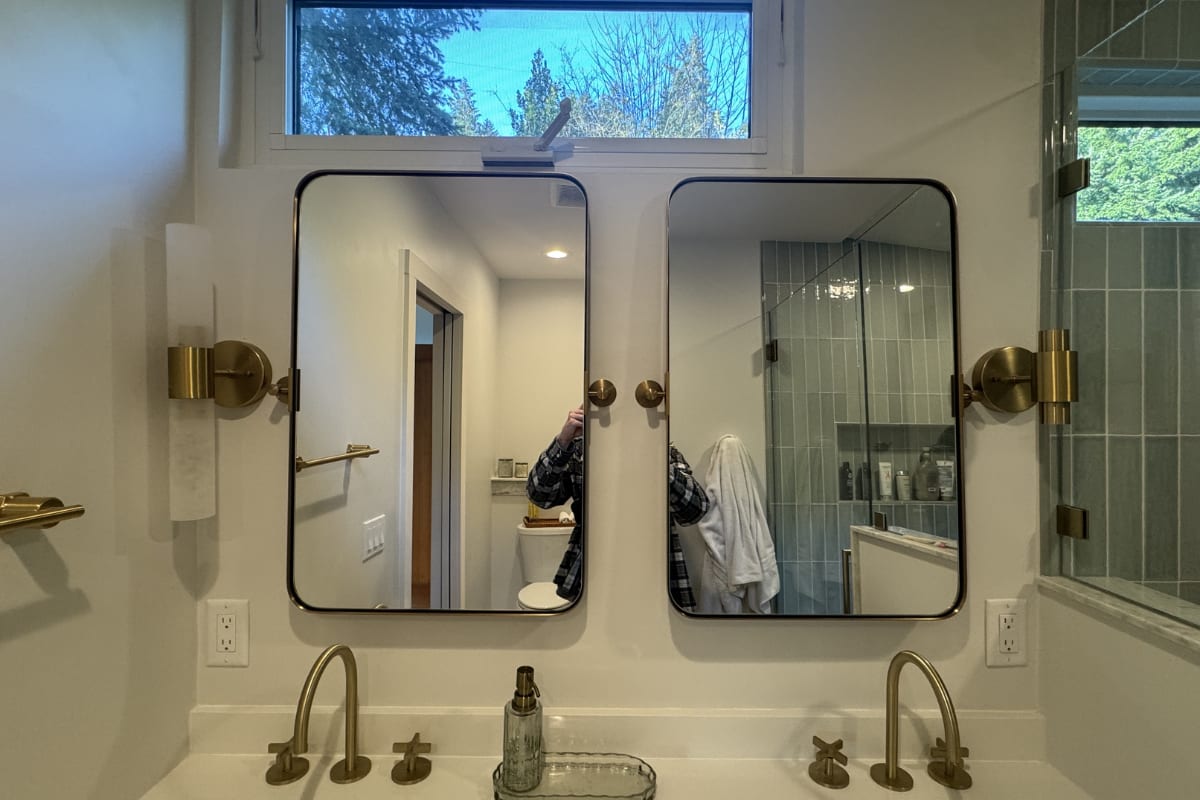
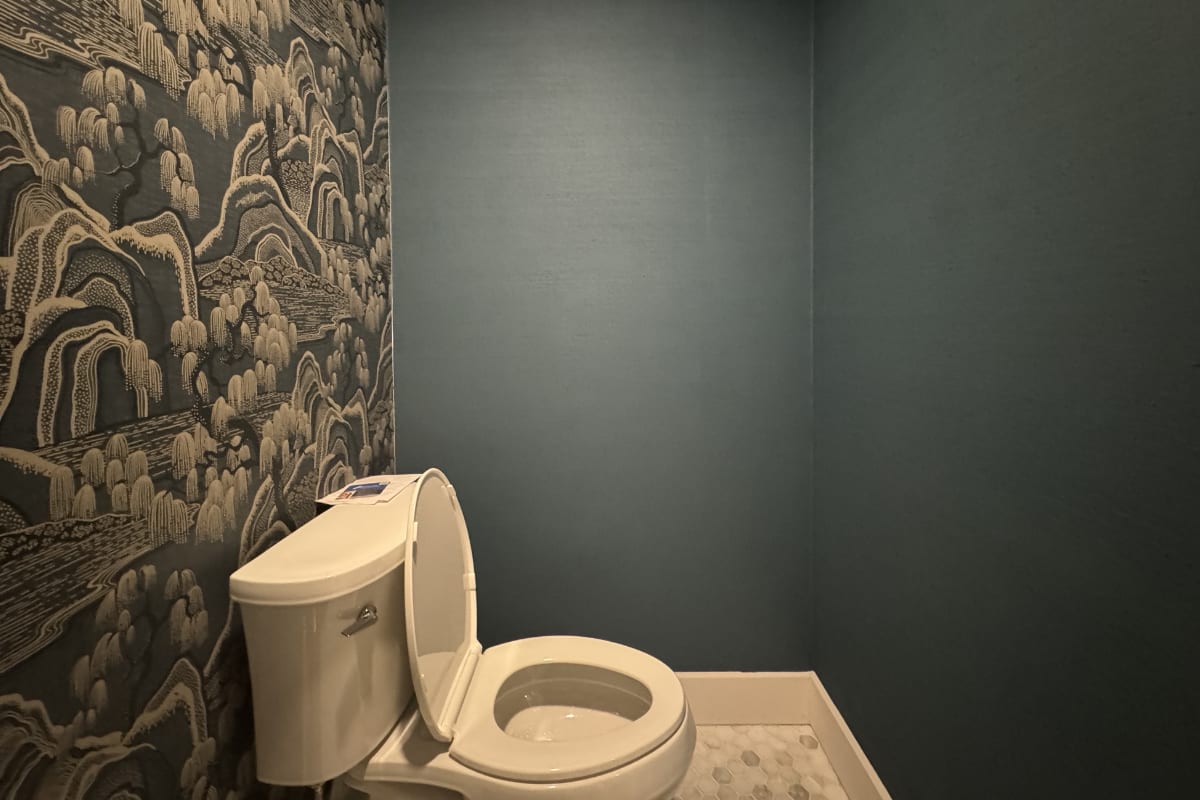
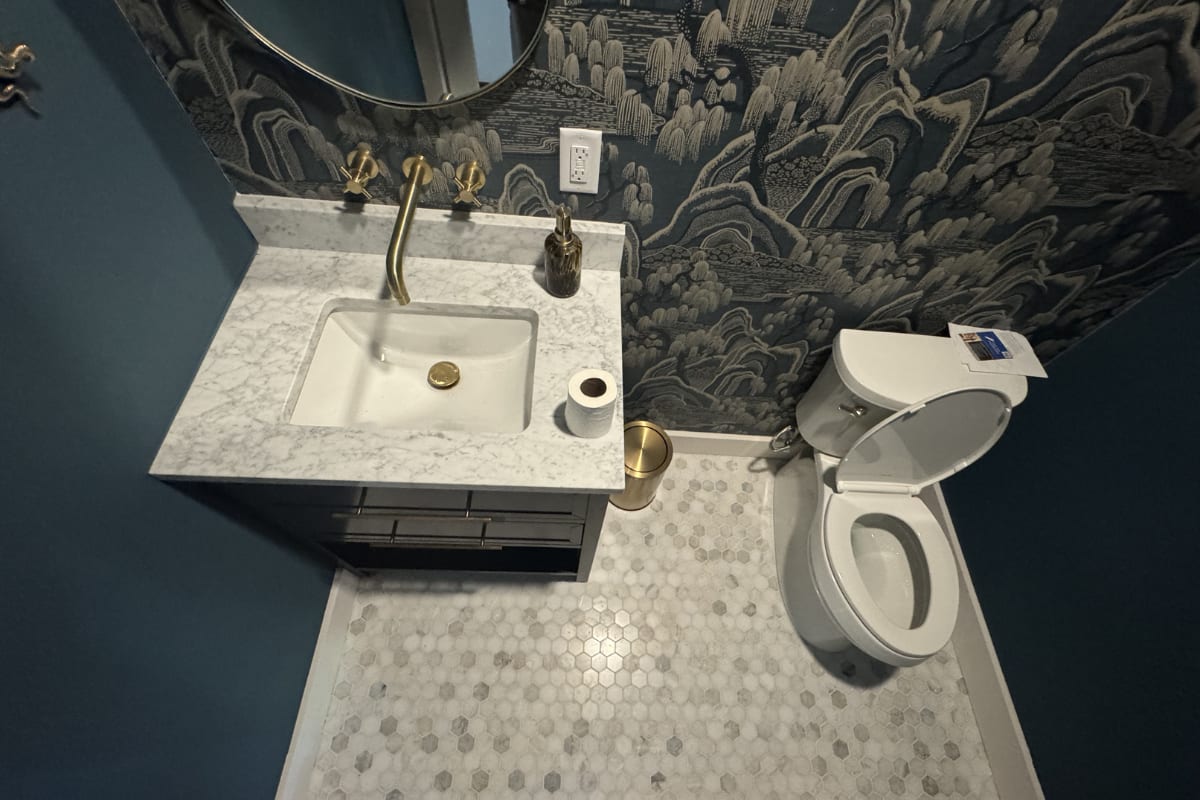
The finish story mixes practical wet-area tile with expressive dry-area materials. A scenic wallpaper with illustrated mountains, water, and trees sits on a deep blue ground, paired with saturated navy or teal painted walls in adjacent planes. A floating vanity zone uses a wall-mount brass faucet punched through wallpaper into a marble or quartz counter with a short backsplash—an elegant look that punishes sloppy rough-in. Separately, a double vanity run uses dark fluted or vertically textured cabinetry, brass towel bars and sconces, pivot mirrors with slim frames, and a second high window that borrows sky and tree views.
In period Seattle homes, swing doors steal space from circulation and tile layouts. A pocket door returns square footage to the plan when the wall cavity is available and framing stays straight. Hardware quality matters: soft-close or concealed systems reduce rattling against adjacent tile or casing.
Five weeks is achievable when demolition discoveries are controlled, lead times are respected, inspections are scheduled intentionally, and wet-work sequencing stays disciplined: rough plumbing and electrical, waterproofing, tile, glass measure, then trim and wallpaper in protected phases. The schedule slips when rough locations keep moving while finishes are trying to lock.
At roughly $67,000, this project sits where many full primary baths land when plumbing moves, windows are added, tile labor is real, and brass plumbing plus glass are non-trivial lines. It is not only material photos that justify the number; it is rerouted drains and supplies, permit fees, inspection-ready work, and careful integration between waterproofing, fenestration, and decorative surfaces.

 Contractor pricing
 Material coordination
 Scope planning
 Kitchen remodels
 Bathroom remodels