For homeowners comparing similar remodels, this is where the budget and schedule start to make sense: rough-in, waterproofing, sequencing, and the hidden work that protects the finished room.
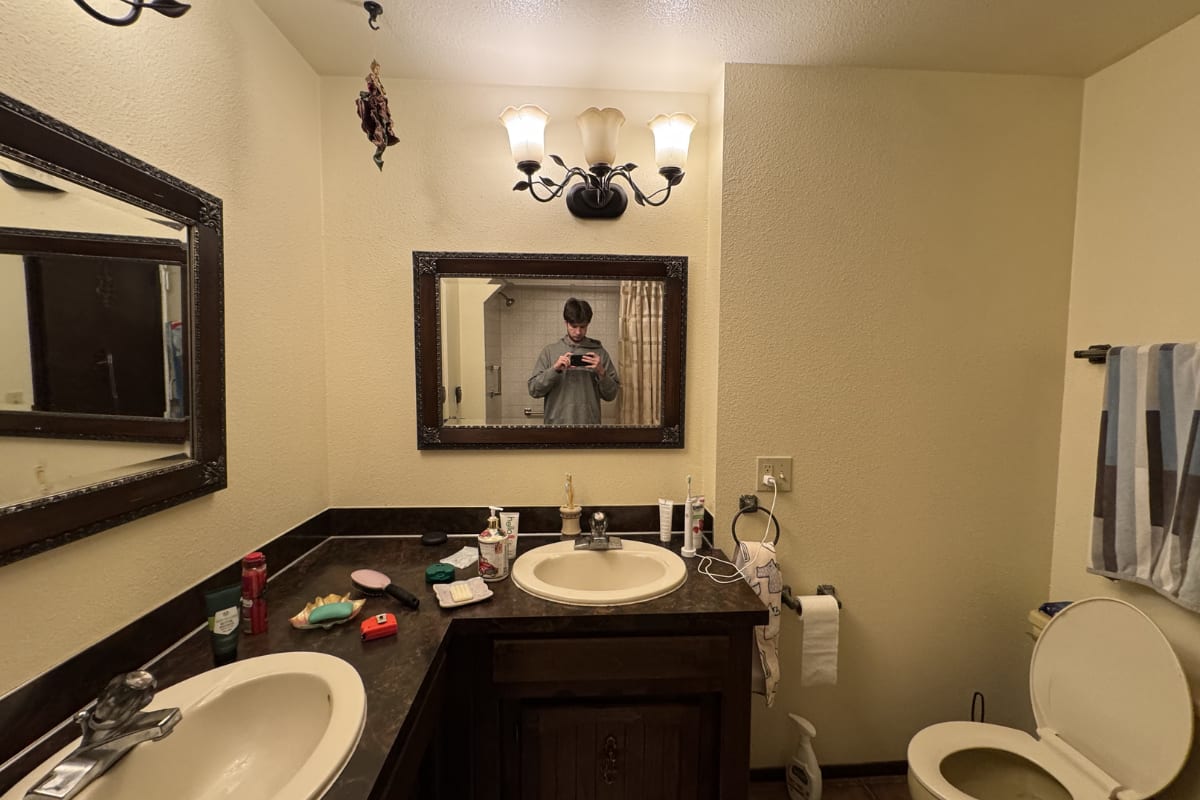
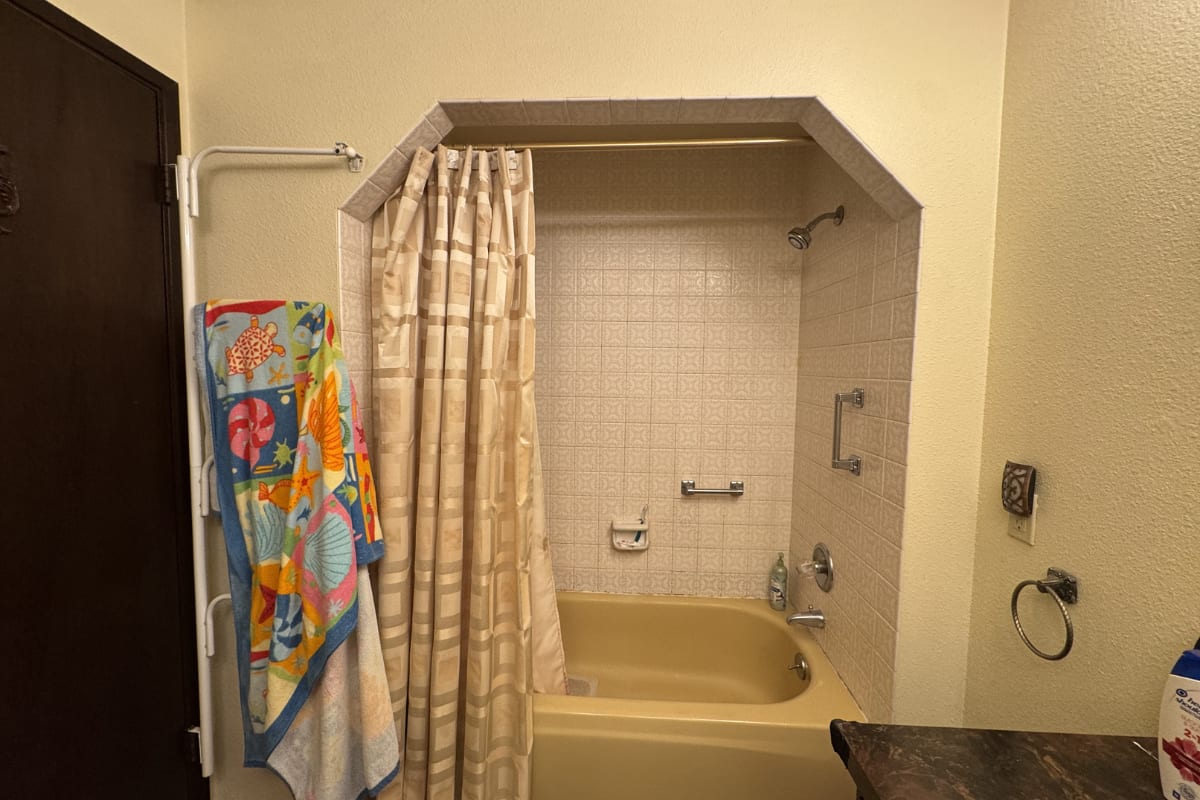
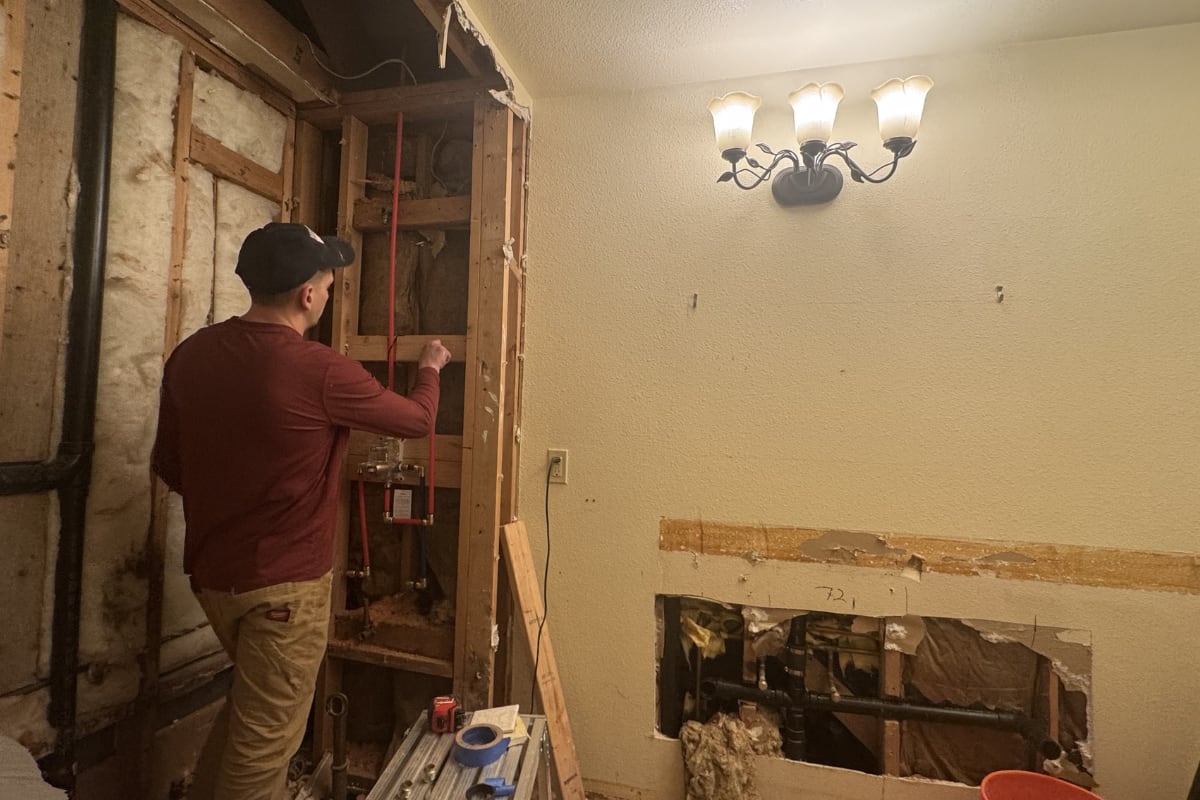
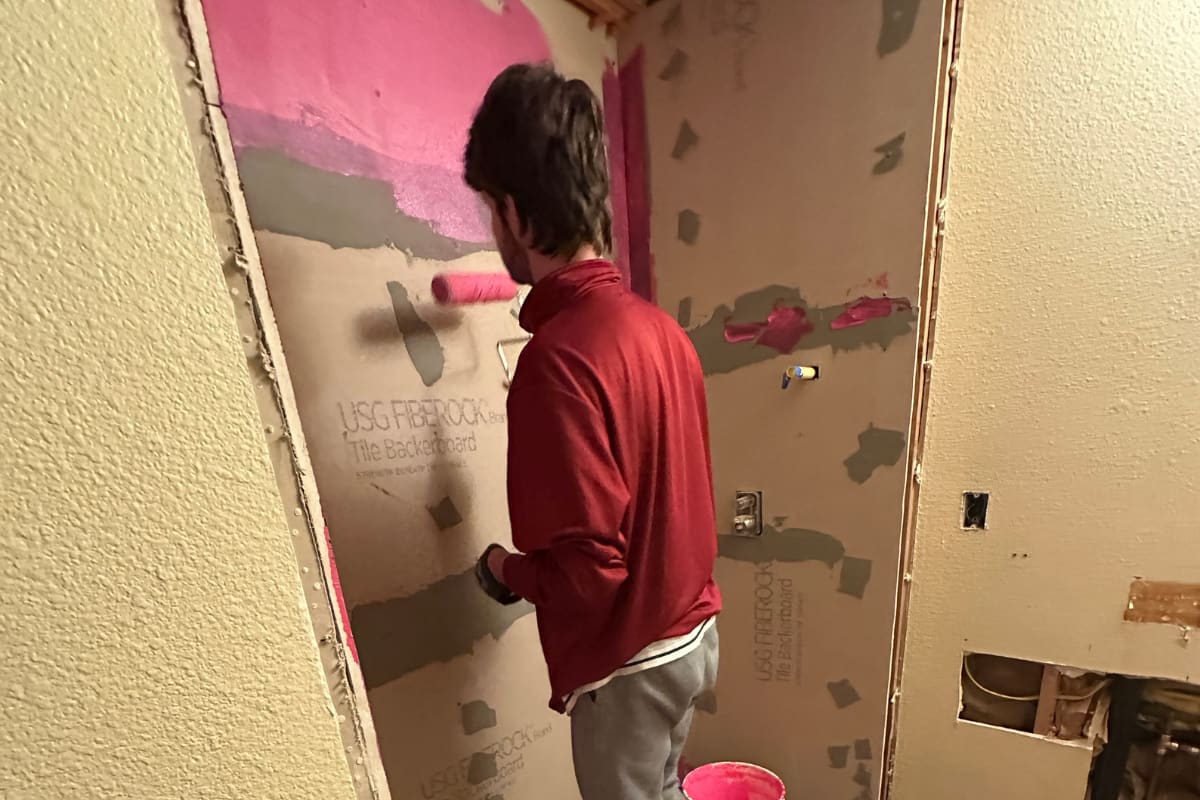
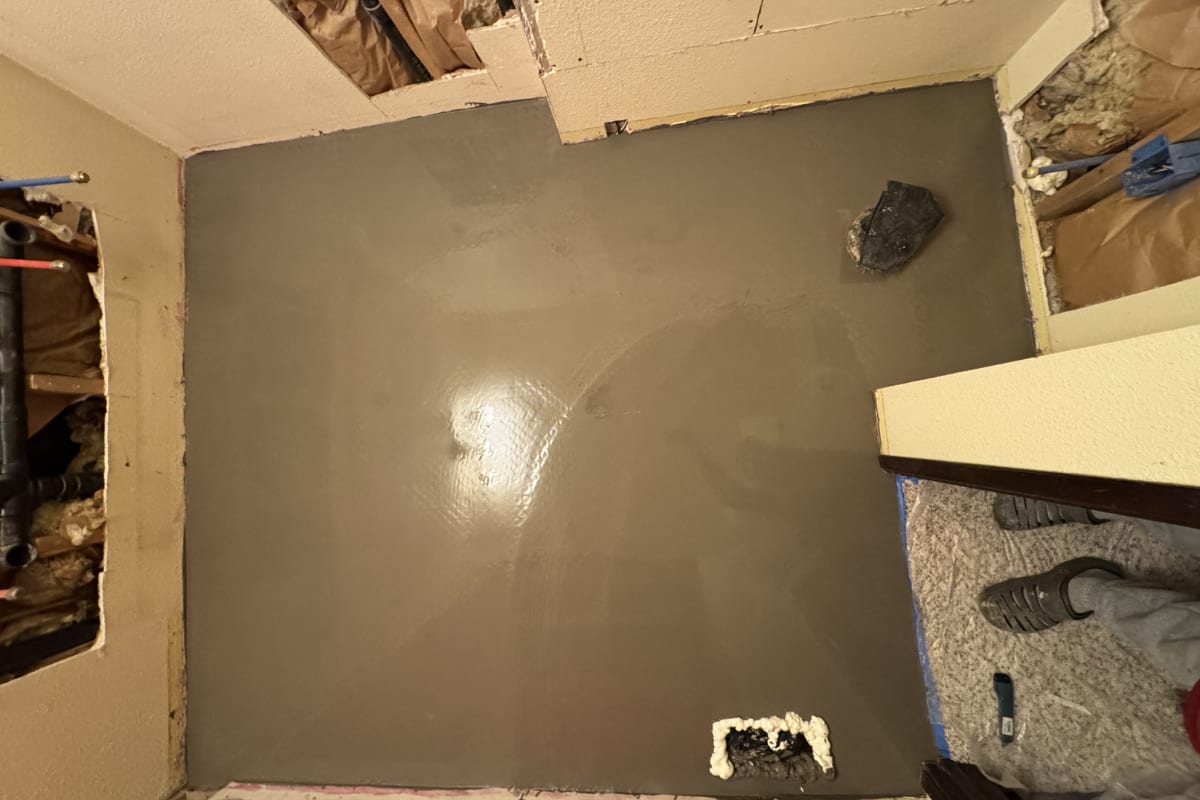
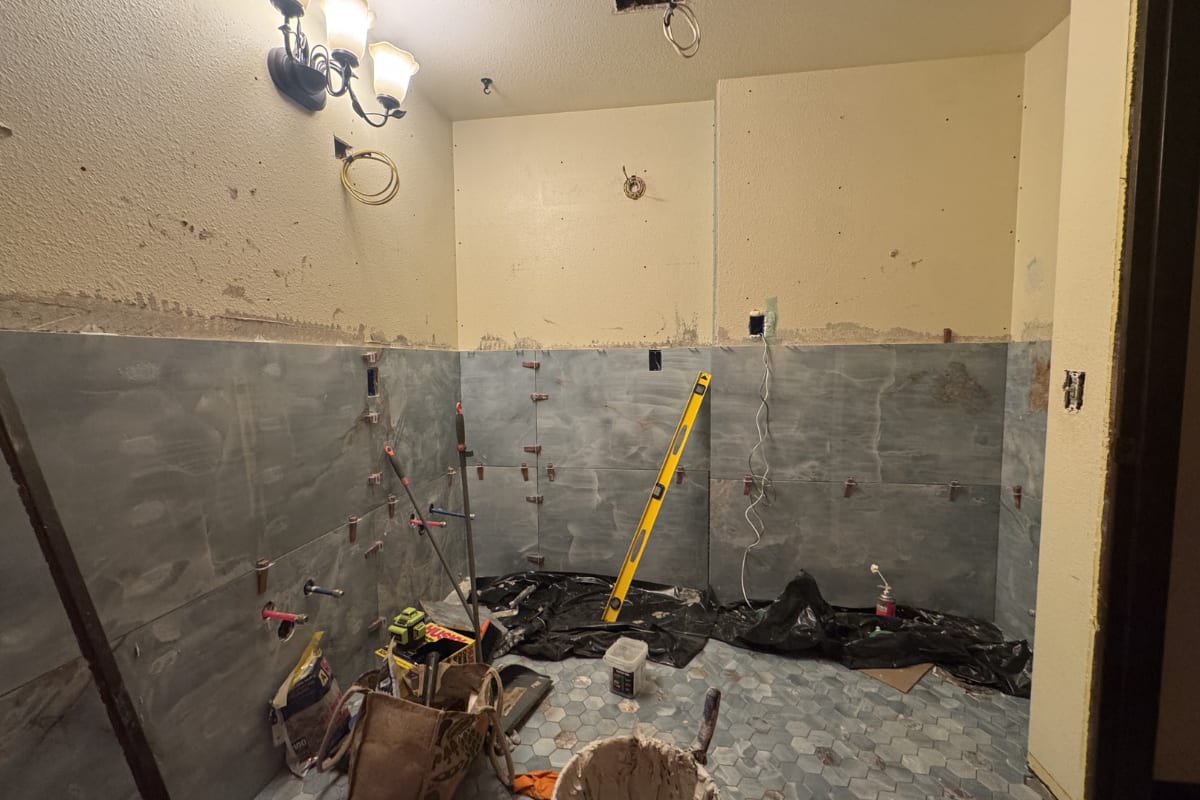
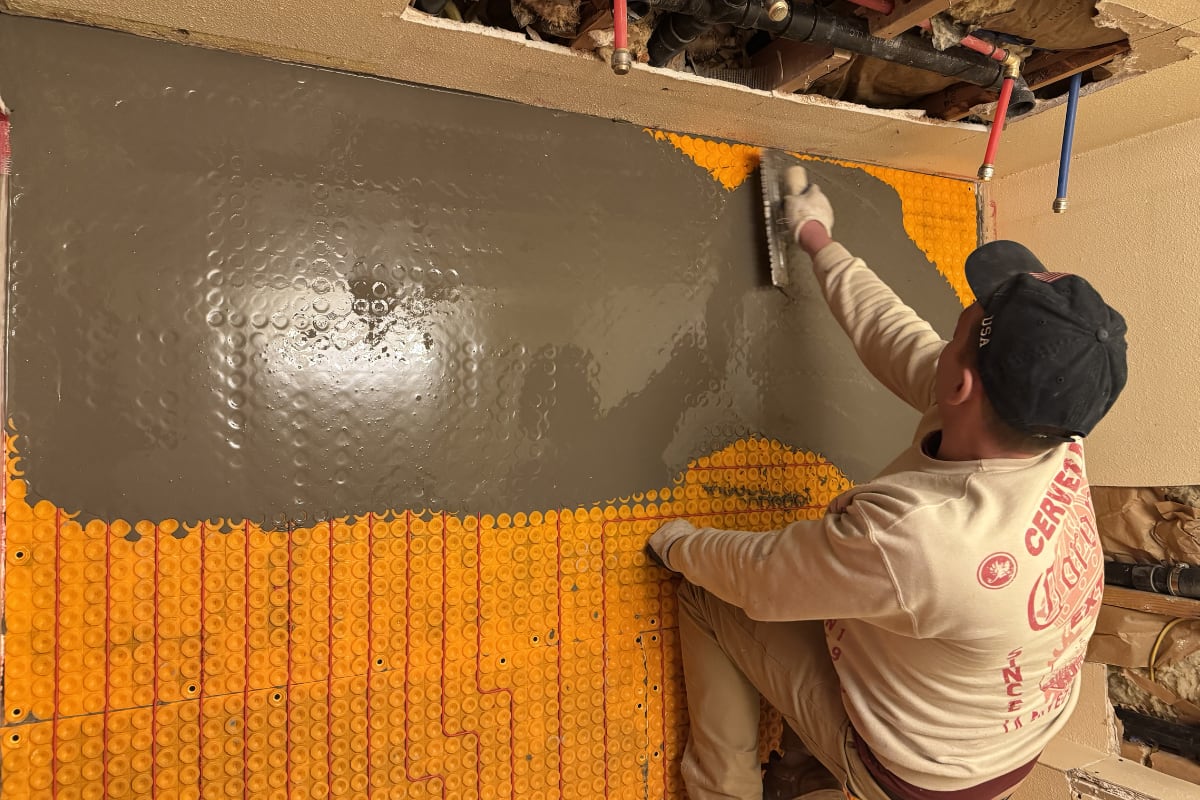
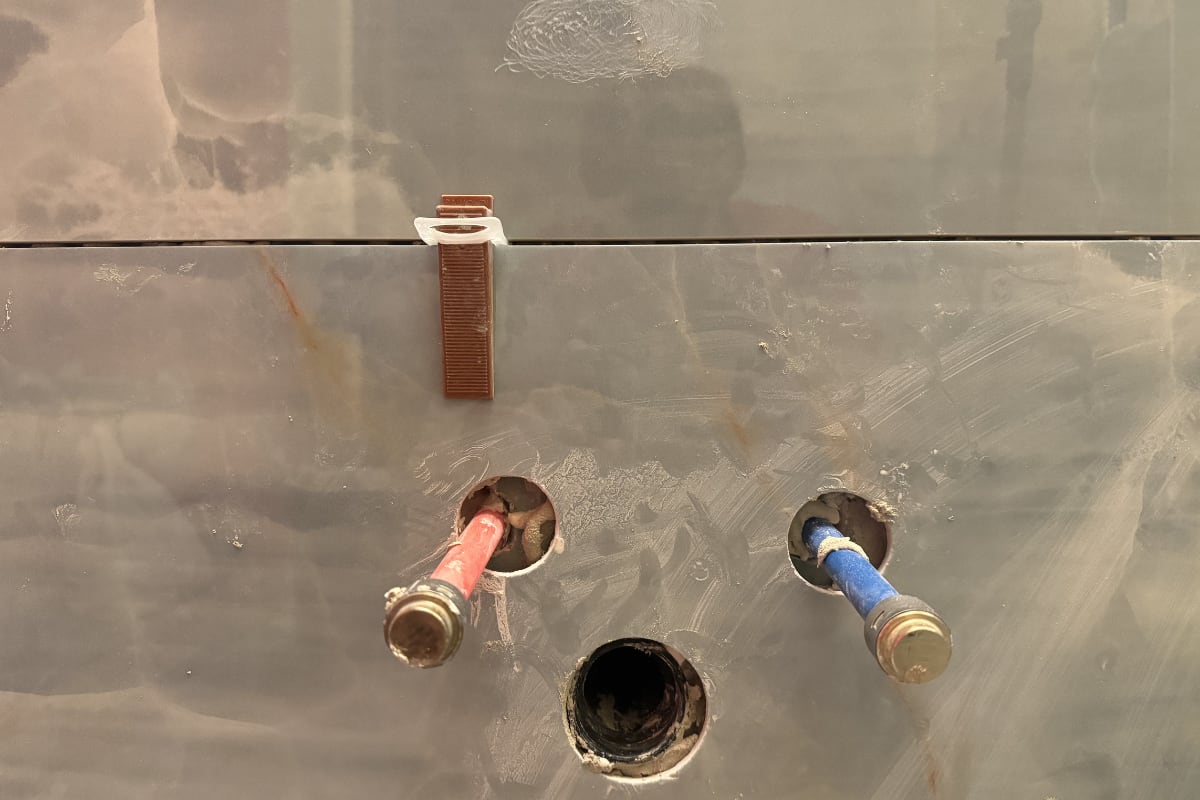
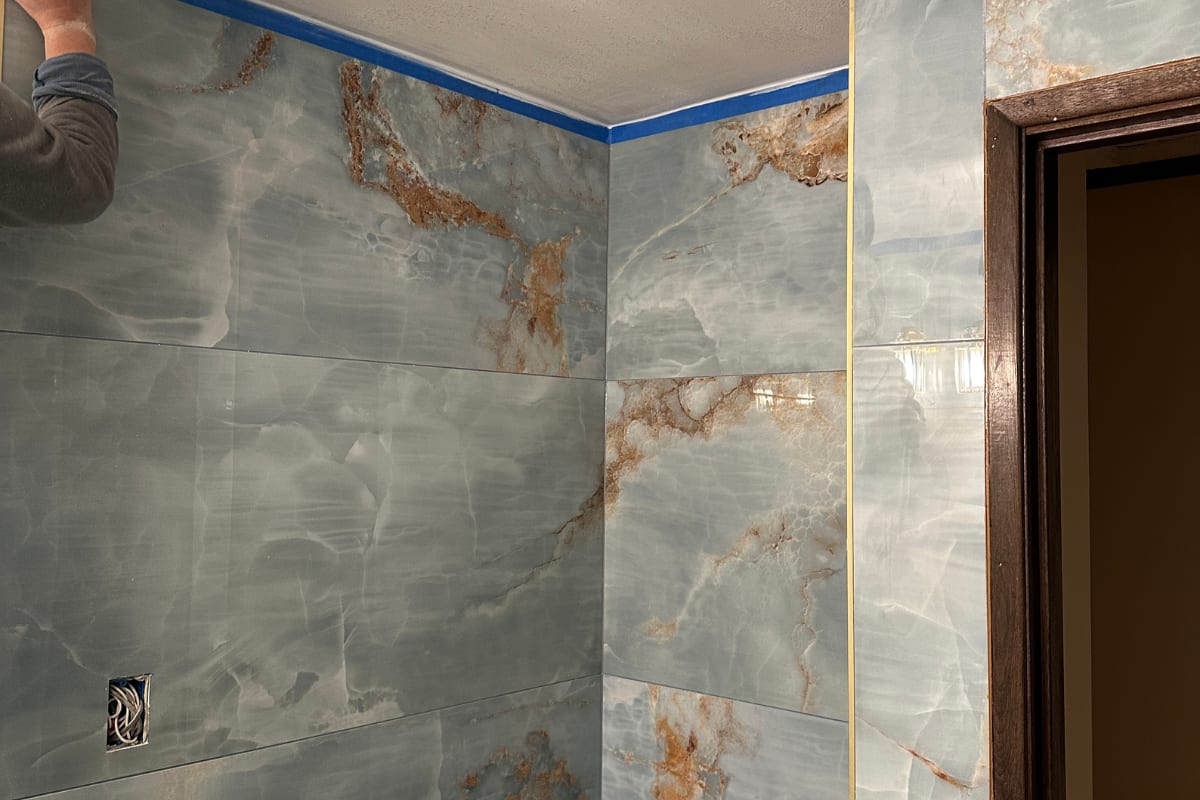
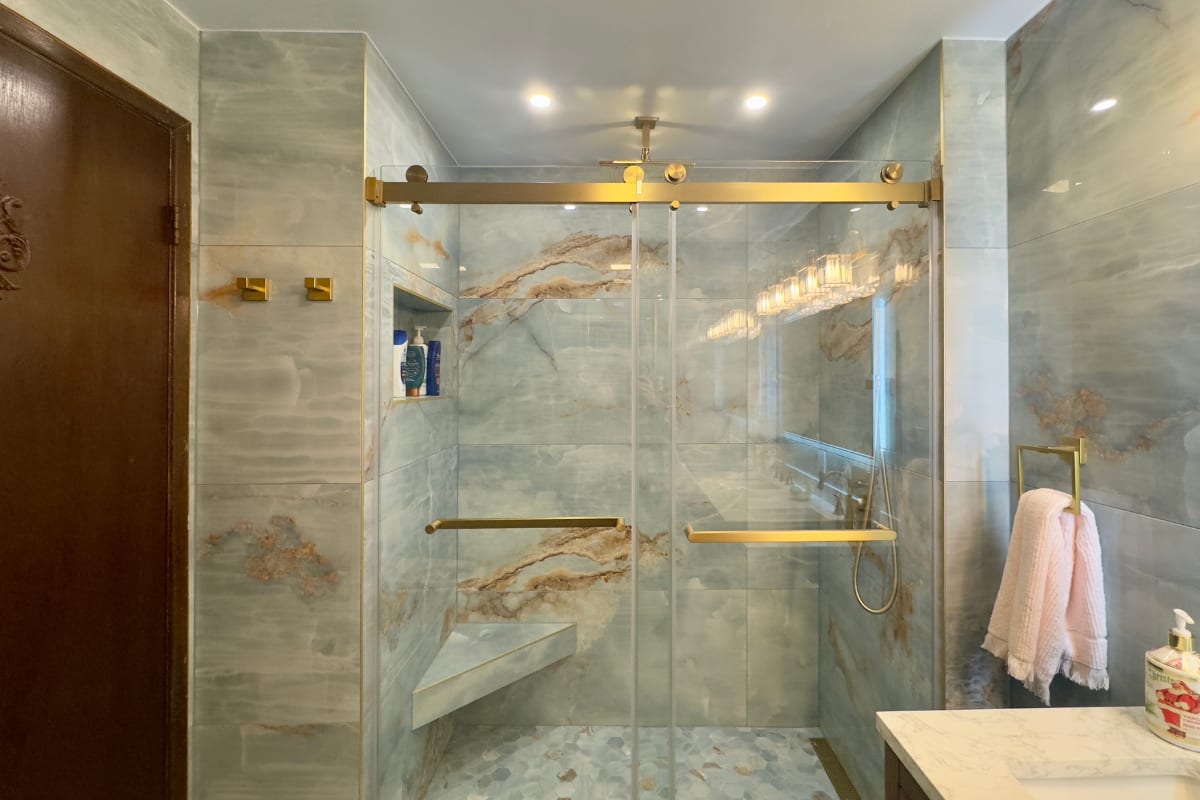
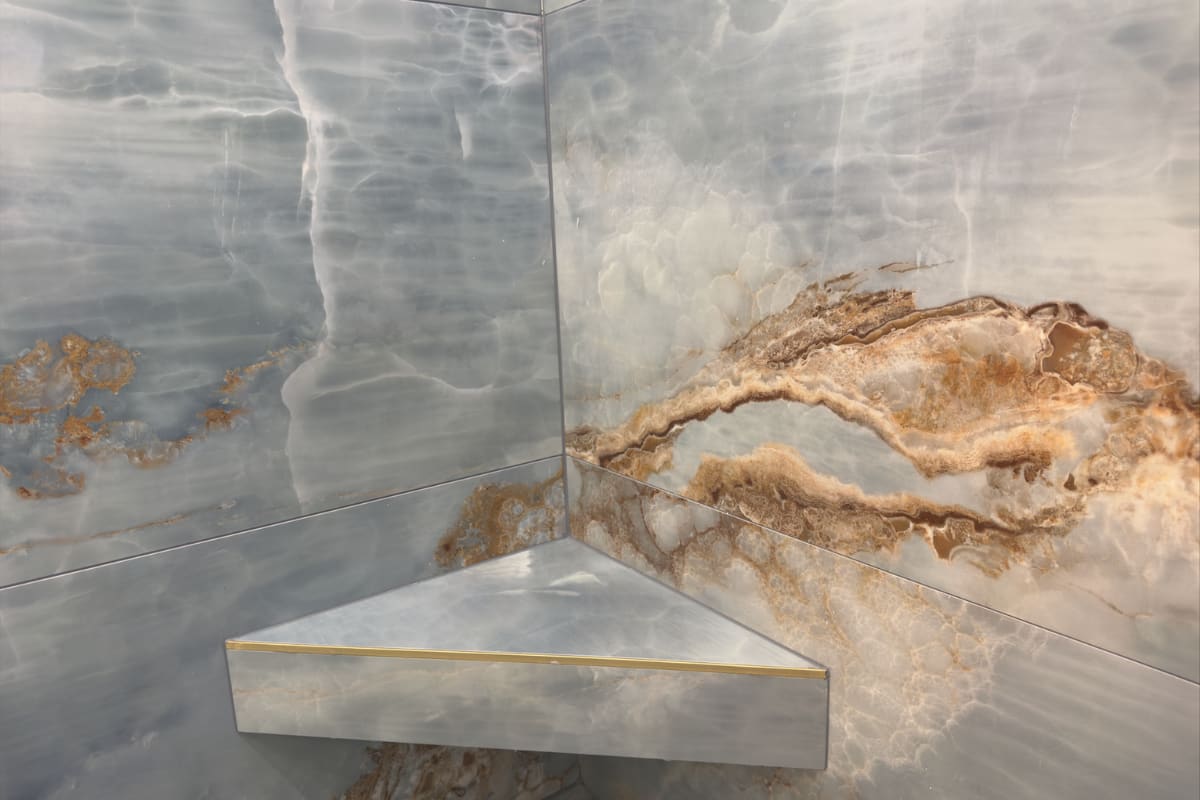
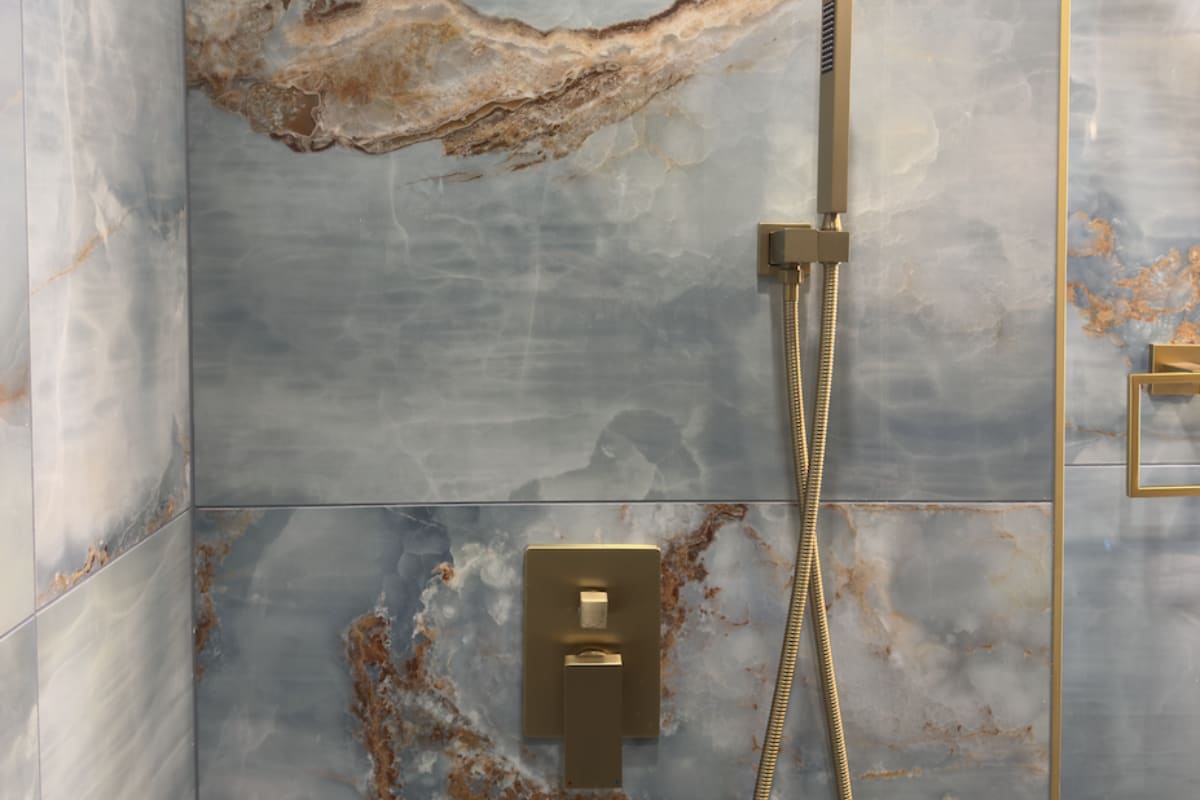
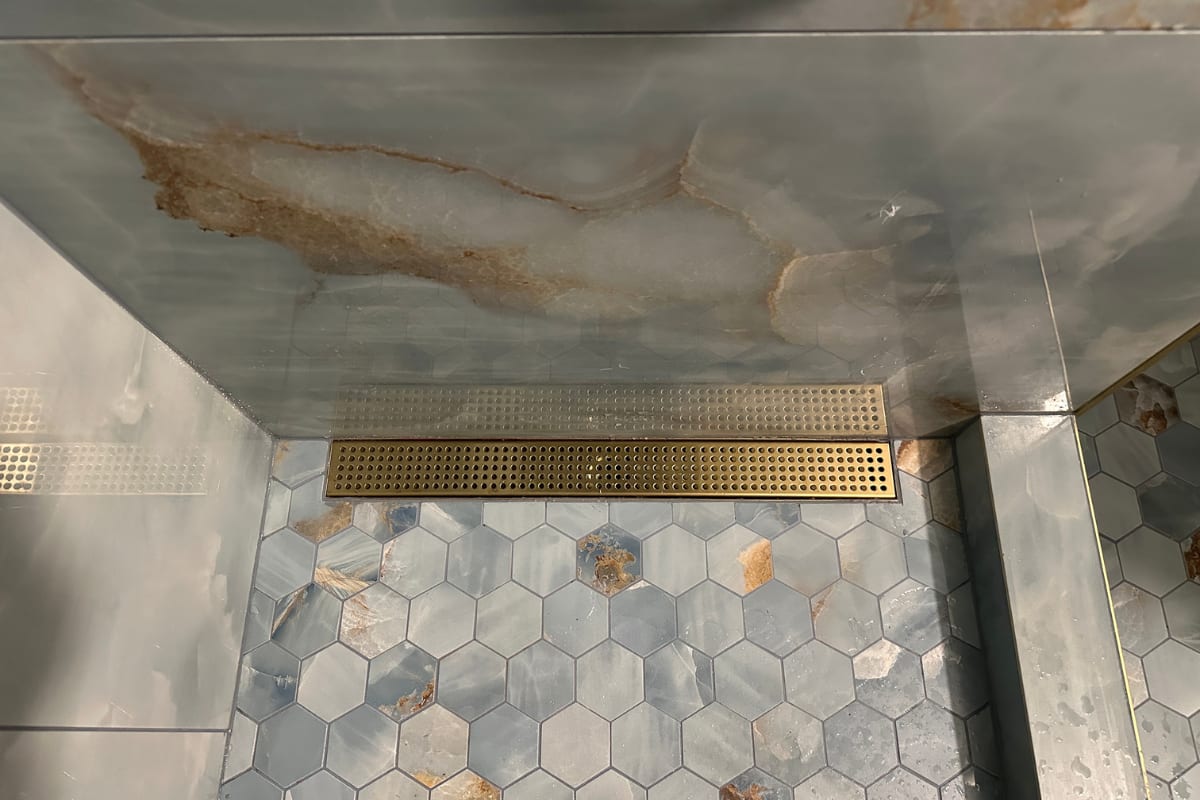
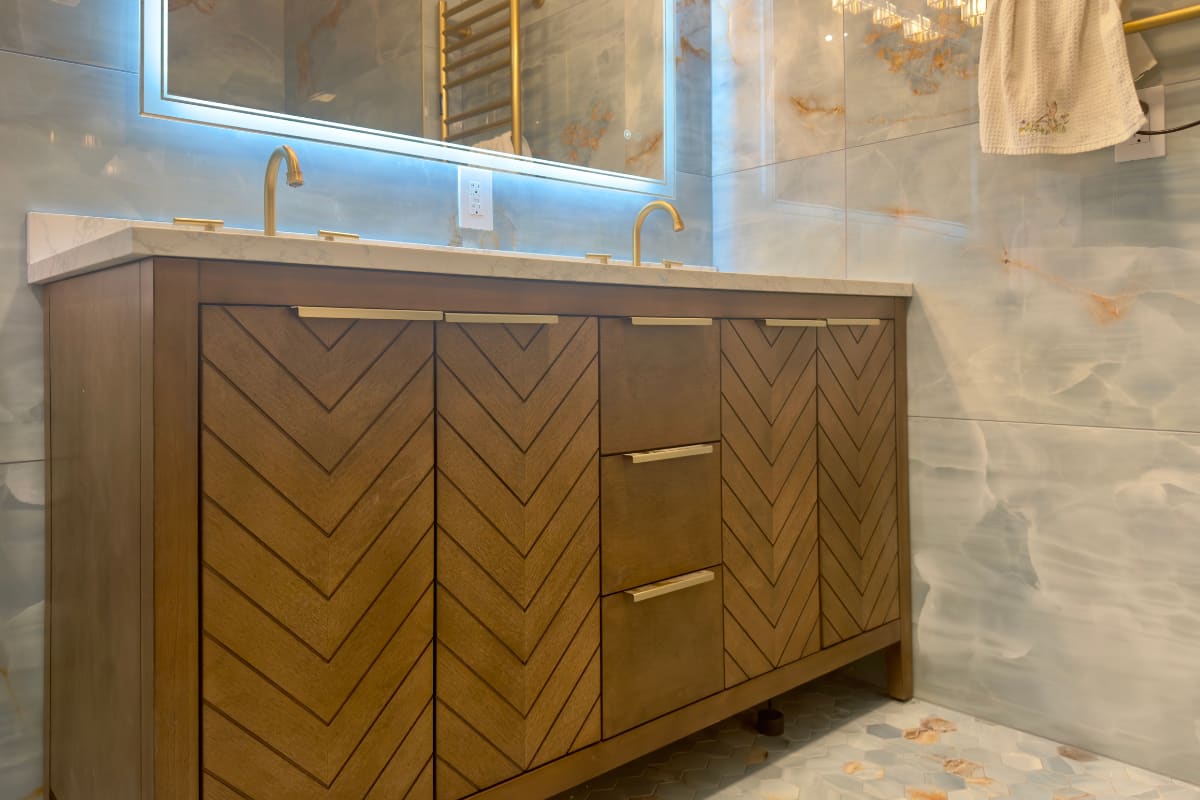
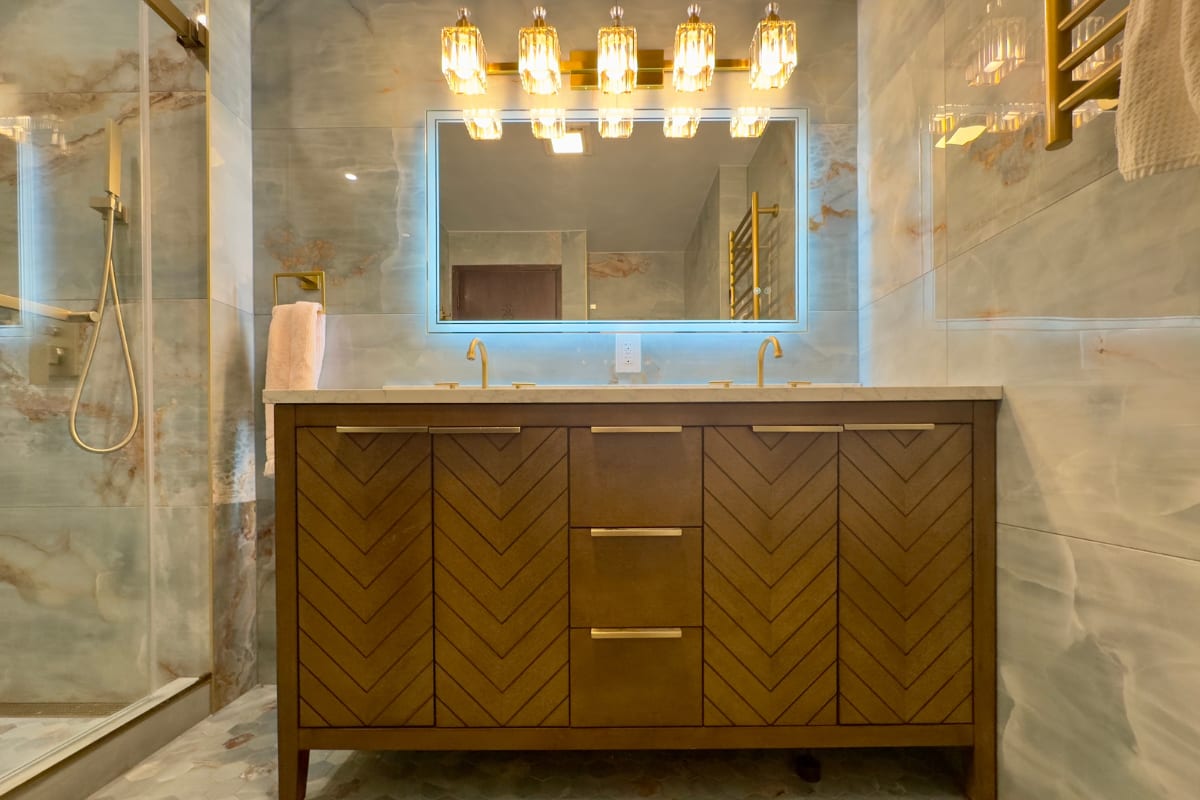
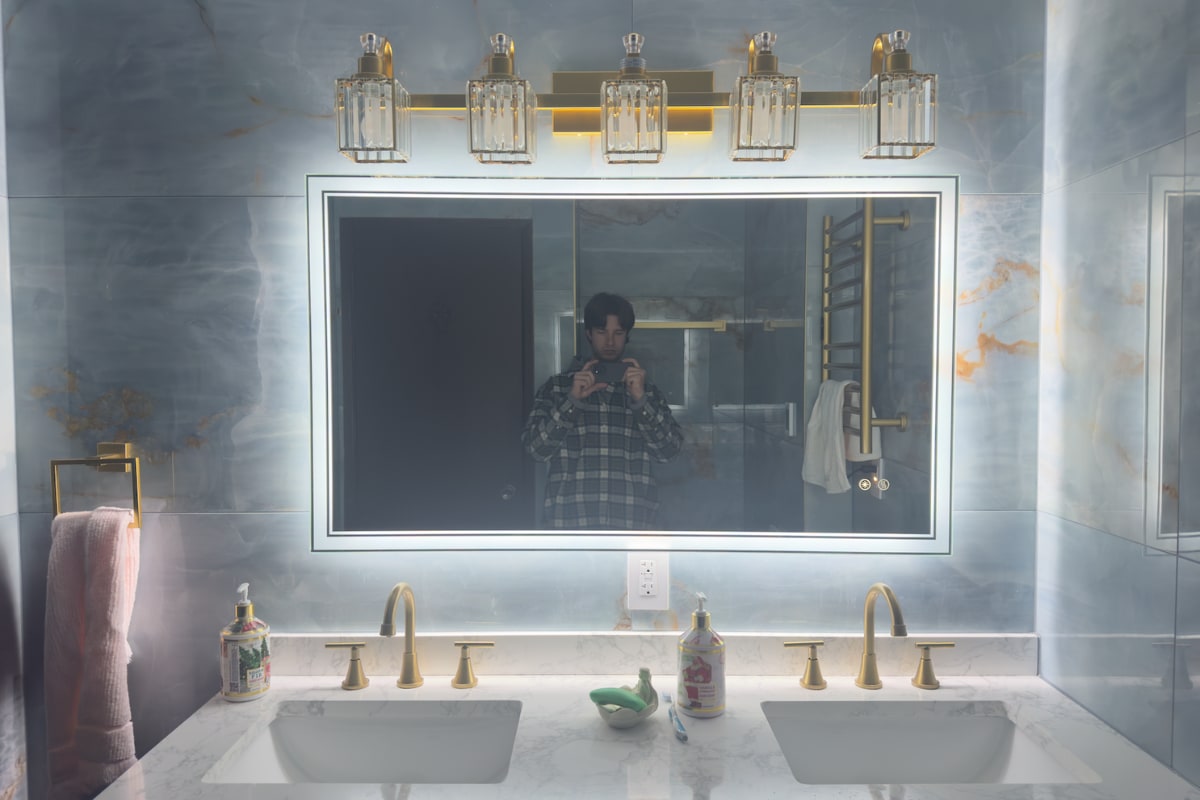
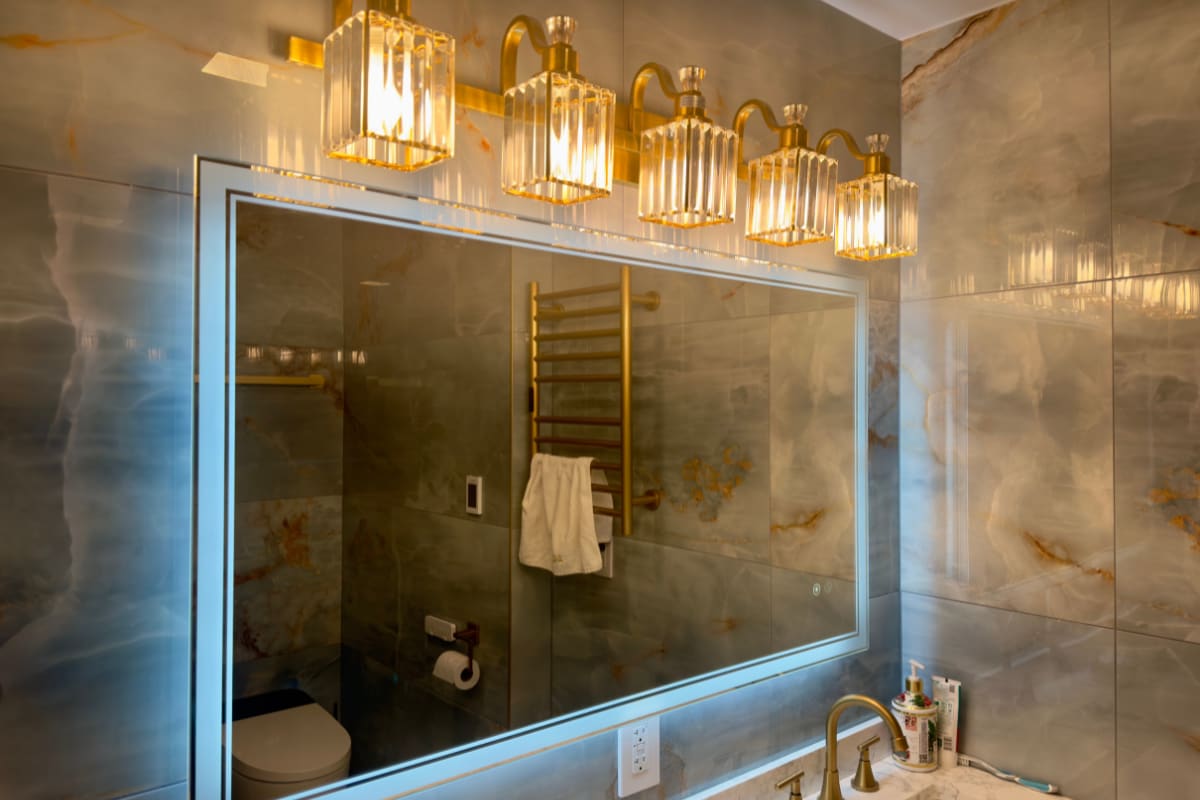
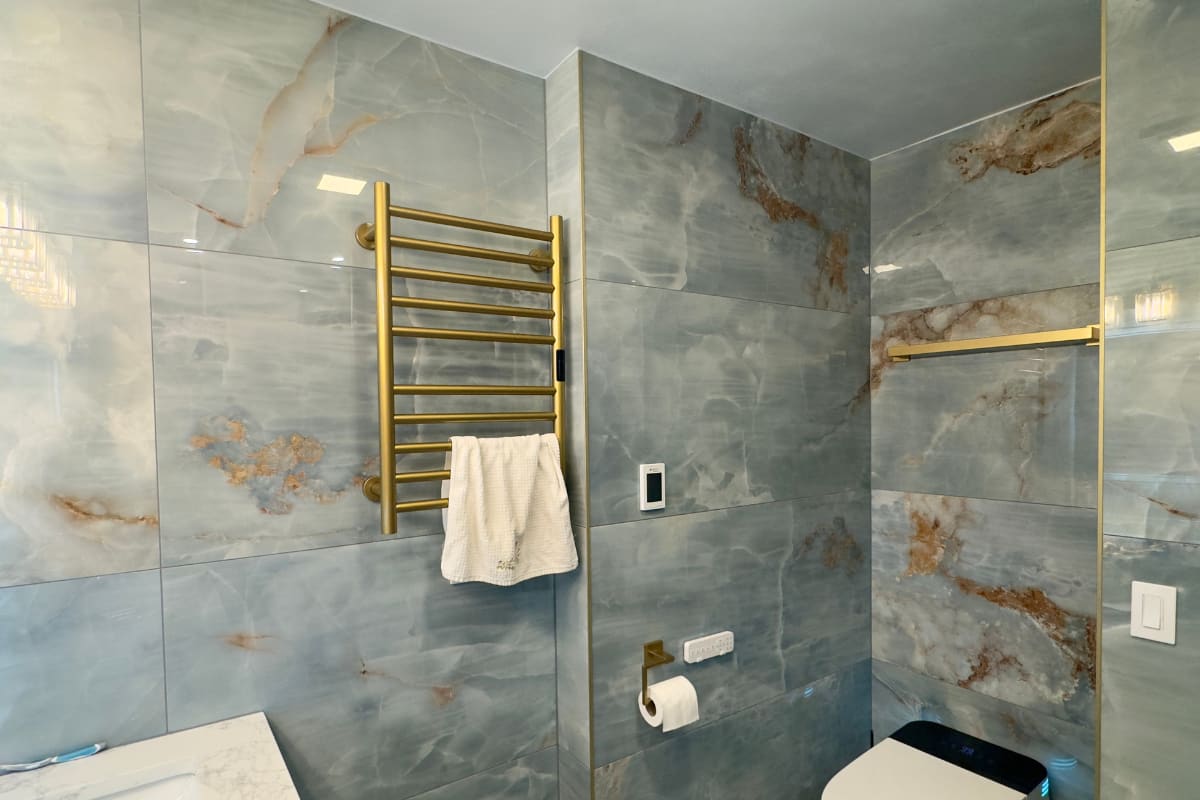
This portfolio set is intentionally sequenced as a story. It opens on dated before conditions—an L-shaped double vanity with drop-in sinks, heavy mirror frames, and a tub alcove with a curtain and small square wall tile—then moves through rough plumbing on PEX, liquid waterproofing over USG Fiberock backer, self-leveling underlayment, uncoupling membrane with visible electric heat wire, and large-format wall setting with leveling clips. The after photographs show what that discipline buys: full-height polished blue-grey slabs with dramatic gold and rust veining, brass metal trim at every outside corner, a walk-in shower with a frameless sliding glass door on brass hardware, a floating corner bench, a tall recessed niche, a brass linear drain in hex mosaic, and a ceiling rain head with matching handheld trim.
Accessibility language gets misused in marketing. This shower is better described as ADA-influenced: a wide approach, a low curb that still provides water containment, a built-in bench for seated bathing, a handheld wand, and clear maneuvering room at the door plane. Those choices help aging homeowners, athletes with injuries, and families who simply want a bench for shaving legs or rinsing kids. The details that make it work are not glamorous: correct pre-slope or flat substrate planning under the linear drain, continuous waterproofing behind the bench blocking, niche shelf slope so bottles do not sit in standing water, and tempered glass sized after tile is complete.
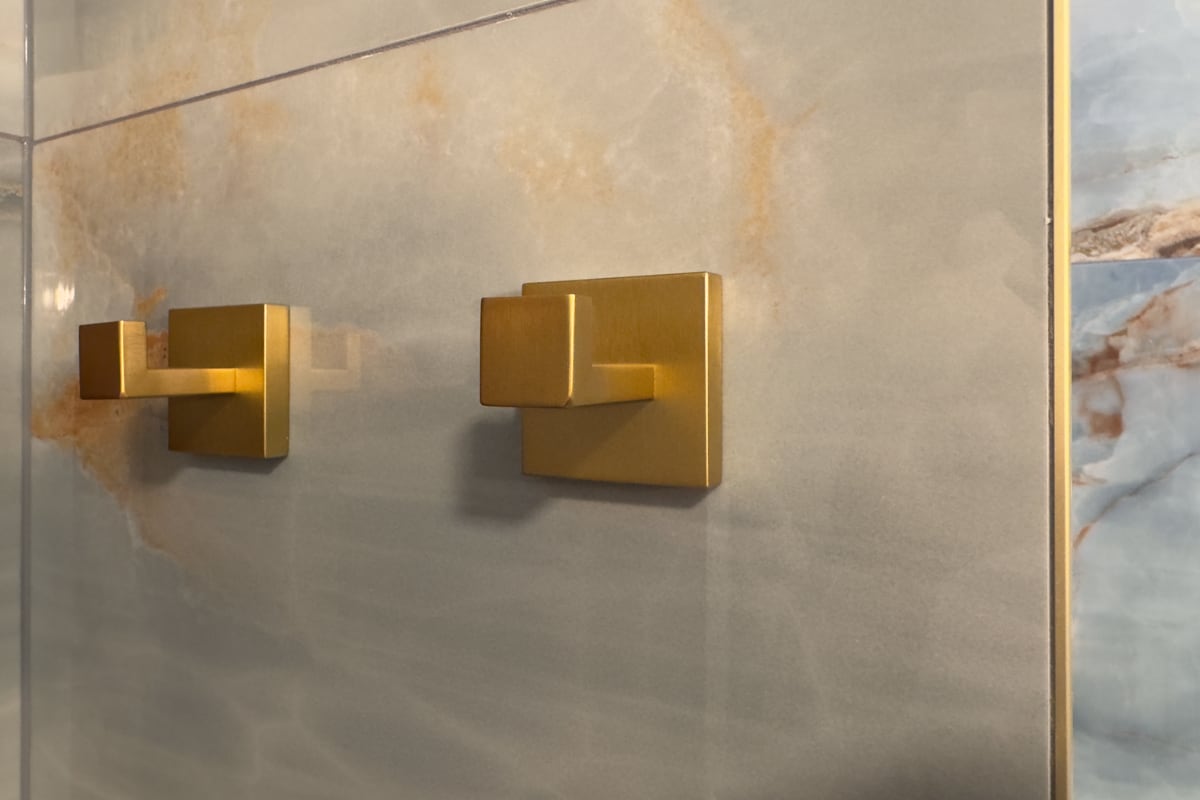
Running polished slabs floor-to-ceiling changes the lighting behavior of the room. Reflective grout lines disappear when they are tight and tone-matched, but the installer pays for that in flatness and clip labor. Brass Schluter-style profiles give a clean stop at door jambs, niche edges, and bench noses while repeating the finish of the faucets, towel ladder, and shower door hardware. When every transition uses the same metal family, the bathroom feels designed rather than assembled.
Electric heat under hex bathroom tile is one of the few upgrades homeowners still thank you for years later. The in-process photo of orange uncoupling membrane with red heat cable is the proof layer: it is not enough to claim heated floors in copy if the build cannot show the mat. A wall thermostat lands where users can reach it without leaning into wet zones. The brass heated towel ladder is a separate circuit conversation but matches the spa positioning of the room.
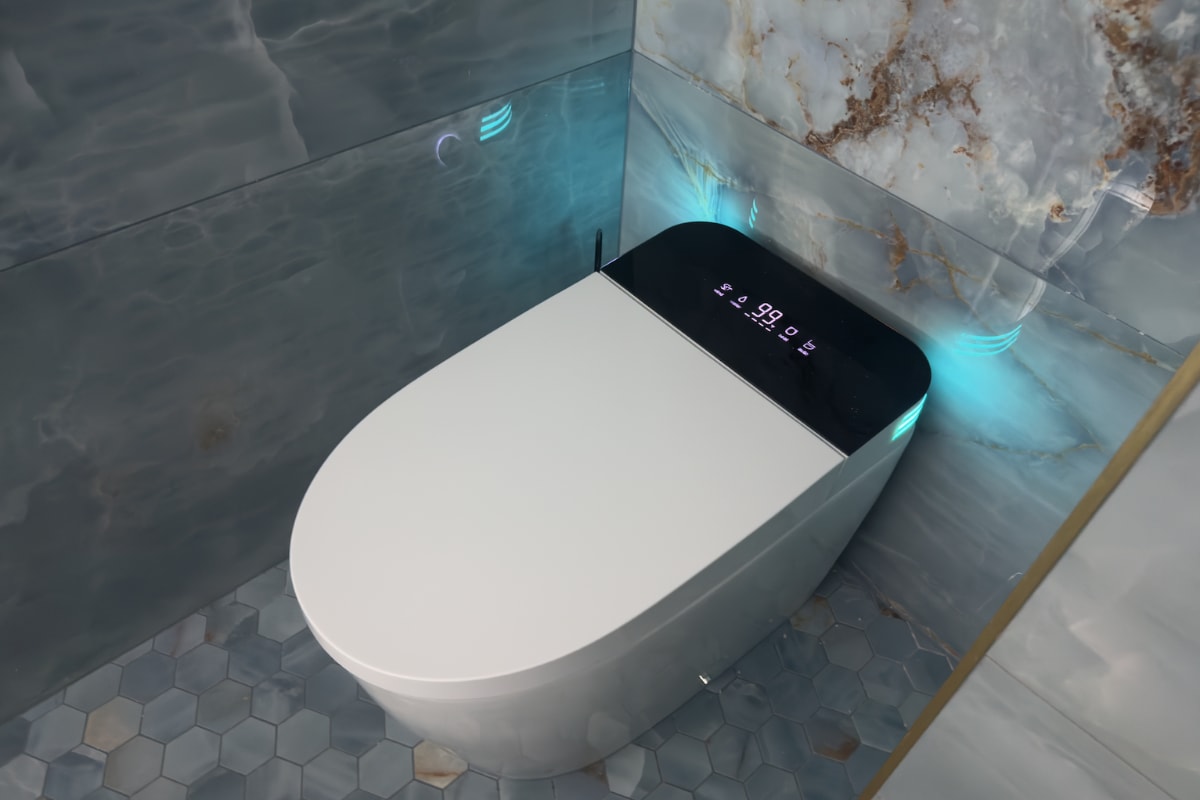
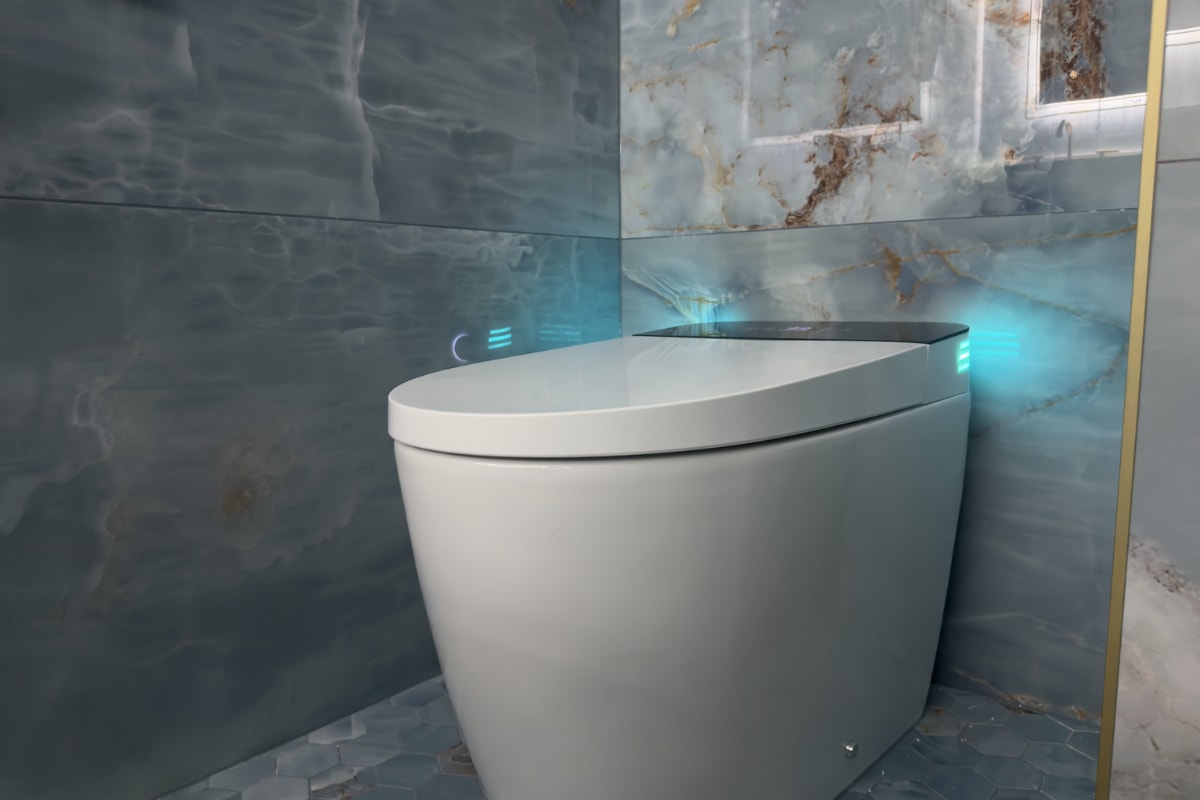
The toilet reads as a single sculpted volume with integrated wash features, lighting accents, and a wall remote. Rough-in location, supply pressure, and GFCI proximity need to match the manufacturer manual, not guesswork at trim. That is part of why this scope belongs in a mid-upper investment band for the Seattle metro, even though the jobsite is Mill Creek on the Eastside.
RENOVA serves a broader Puget Sound footprint than the city limits. Homeowners in Seattle often compare portfolios across the metro when evaluating waterproofing discipline, large-format tile competence, and accessible shower design. This Mill Creek job is a strong reference for those technical categories even though the address is east of the lake.
Exact invoices vary with existing plumbing condition, panel capacity, glass lead times, and slab pricing swings. The numbers shown are a defensible comparable range for a full gut with heat wire, large-format wet walls, sliding glass, smart toilet, and premium vanity lighting—not a quote. Timelines stretch when inspections stack or slab shipments slip; six to eight weeks is a realistic planning window for similar complexity when rough work stays clean.

 Contractor pricing
 Material coordination
 Scope planning
 Kitchen remodels
 Bathroom remodels