For homeowners comparing similar remodels, this is where the budget and schedule start to make sense: rough-in, waterproofing, sequencing, and the hidden work that protects the finished room.
This Ravenna, Seattle bathroom is a strong teaching example of what partial remodel actually means in practice. The homeowner did not blow out every partition or move the toilet across the room. Instead, the scope concentrated where daily life was failing: the vanity was still a single sink when the household needed two, the tub and shower finishes were tired, and the fixture package did not match modern expectations. About $30,000 and roughly two and a half weeks on site bought a coordinated finish pass with real plumbing and electrical work behind it—not only new paint.
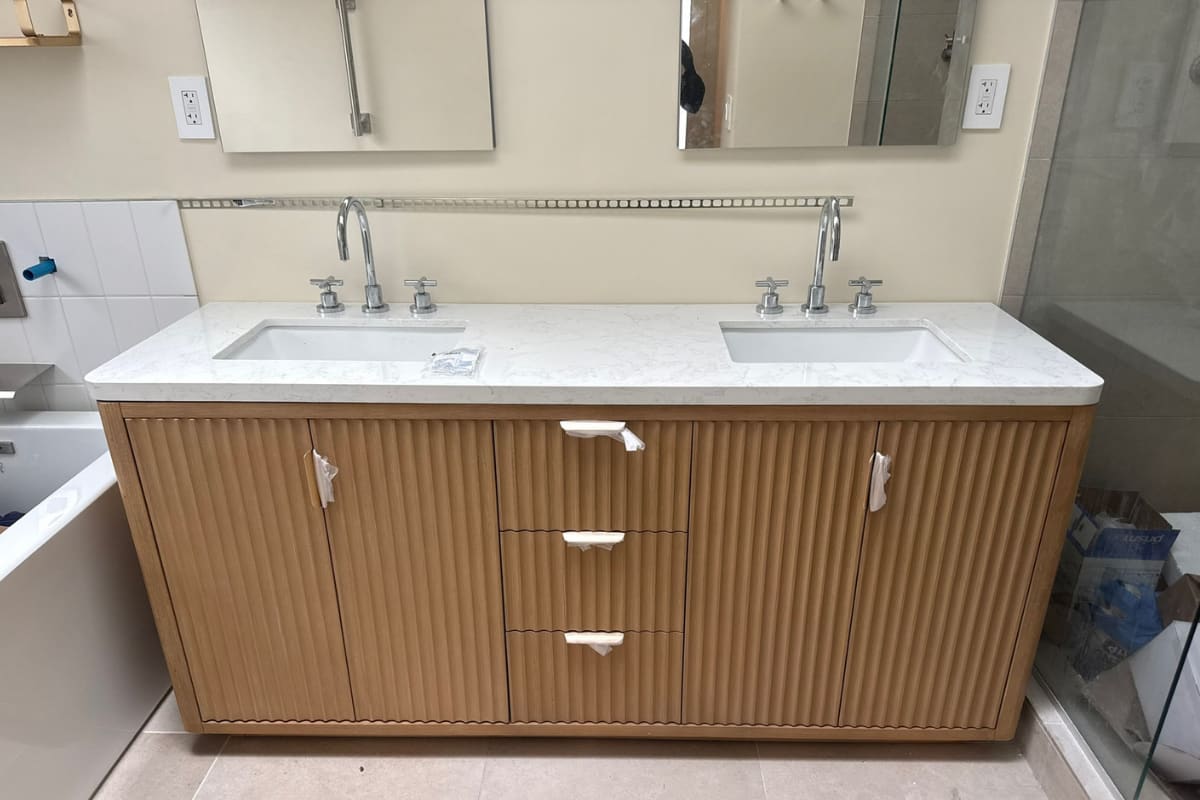
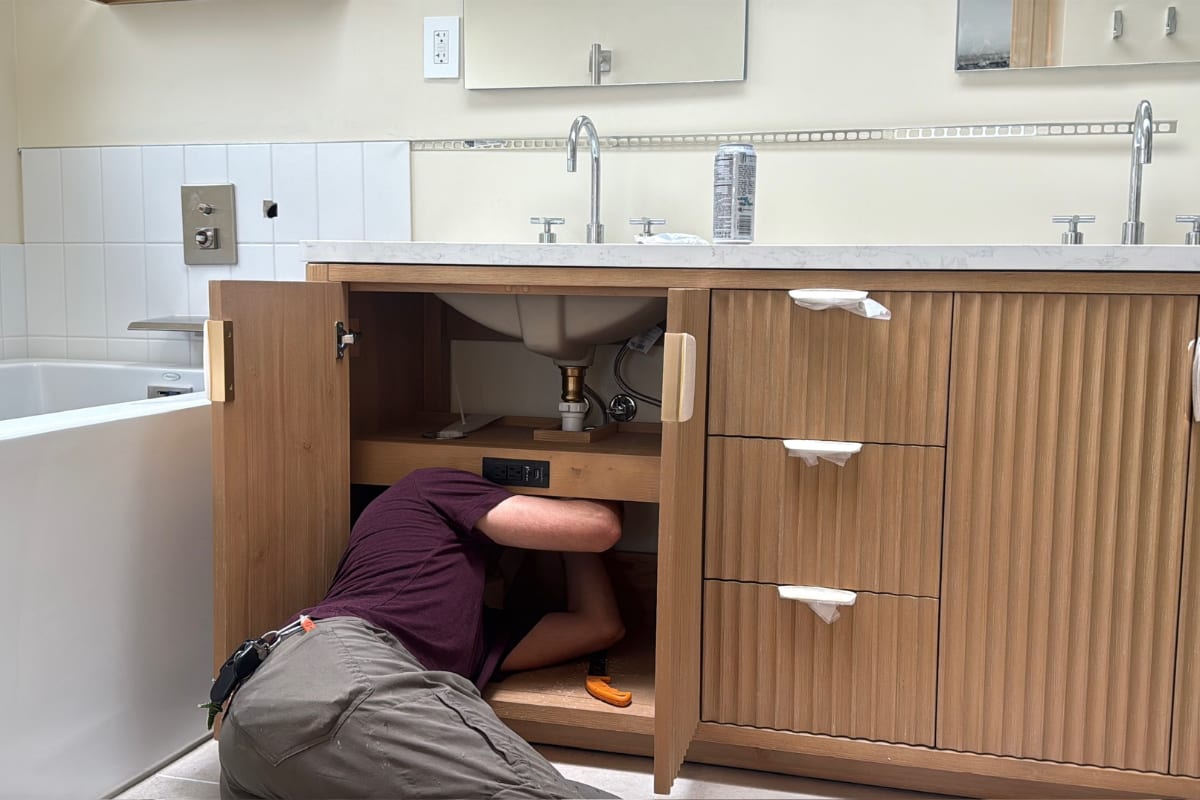
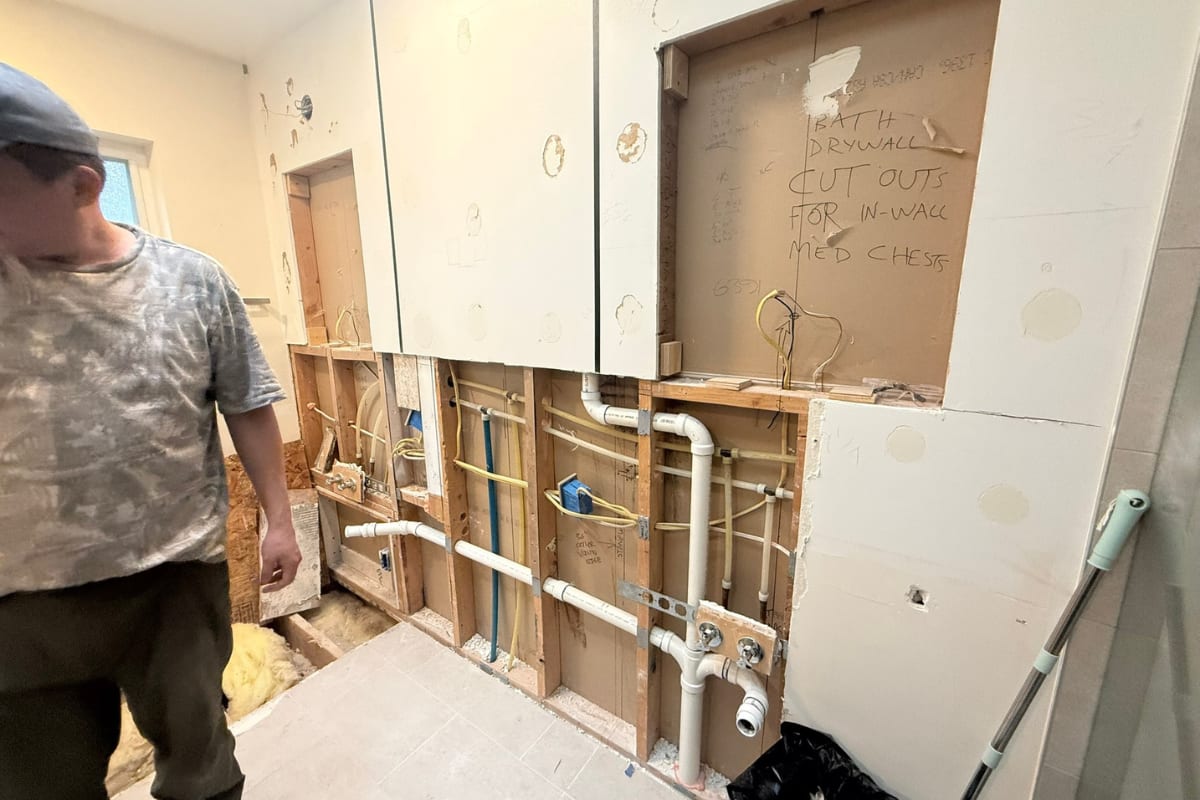
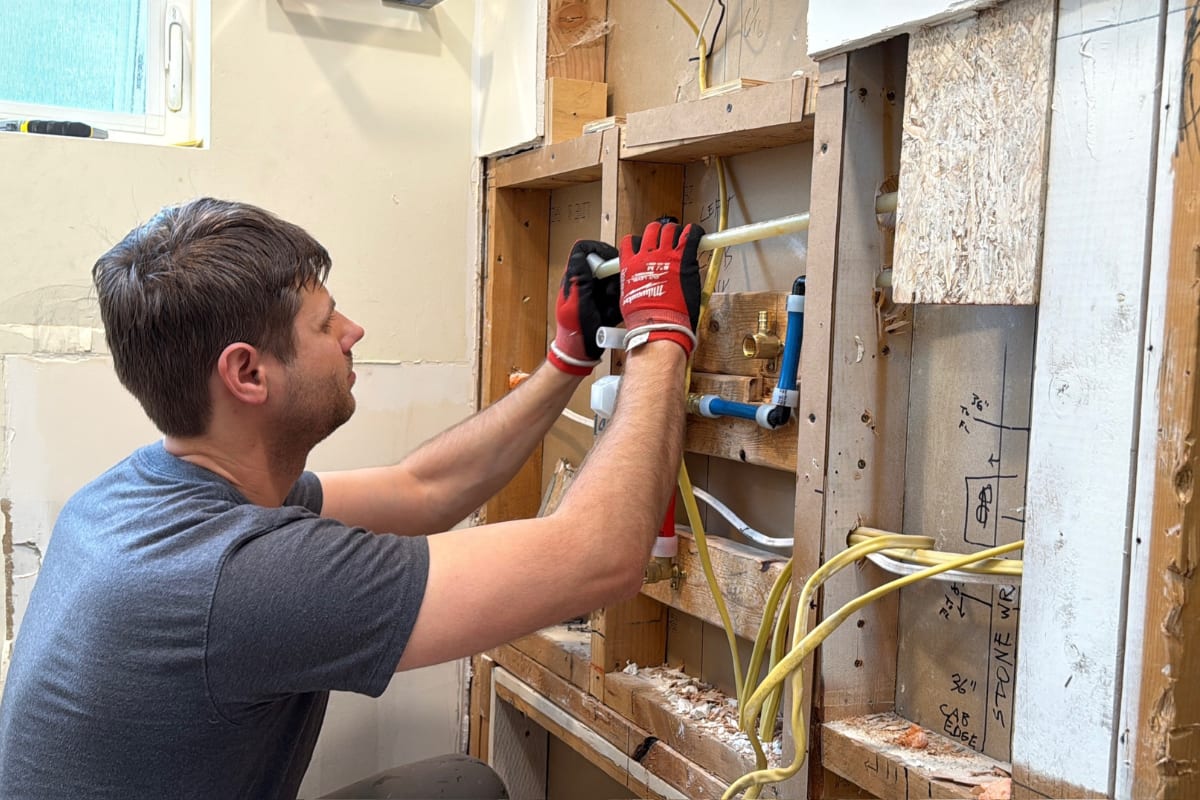
A double vanity is not only a wider cabinet box. The wall cavity must carry two independent lavatory drains, hot and cold supplies for both sides, and venting that still meets code when the original stack assumed one fixture group. The open-wall photographs from this job show that reality clearly: mirrored left and right PVC drops, color-coded PEX, and disciplined strapping so pipes stay quiet after drywall closes. Above the rough plumbing, two large rectangular openings were framed for recessed mirrored storage, which is the right companion detail for a double vanity because each person gets mirror-forward storage without fighting one shared medicine cabinet door.
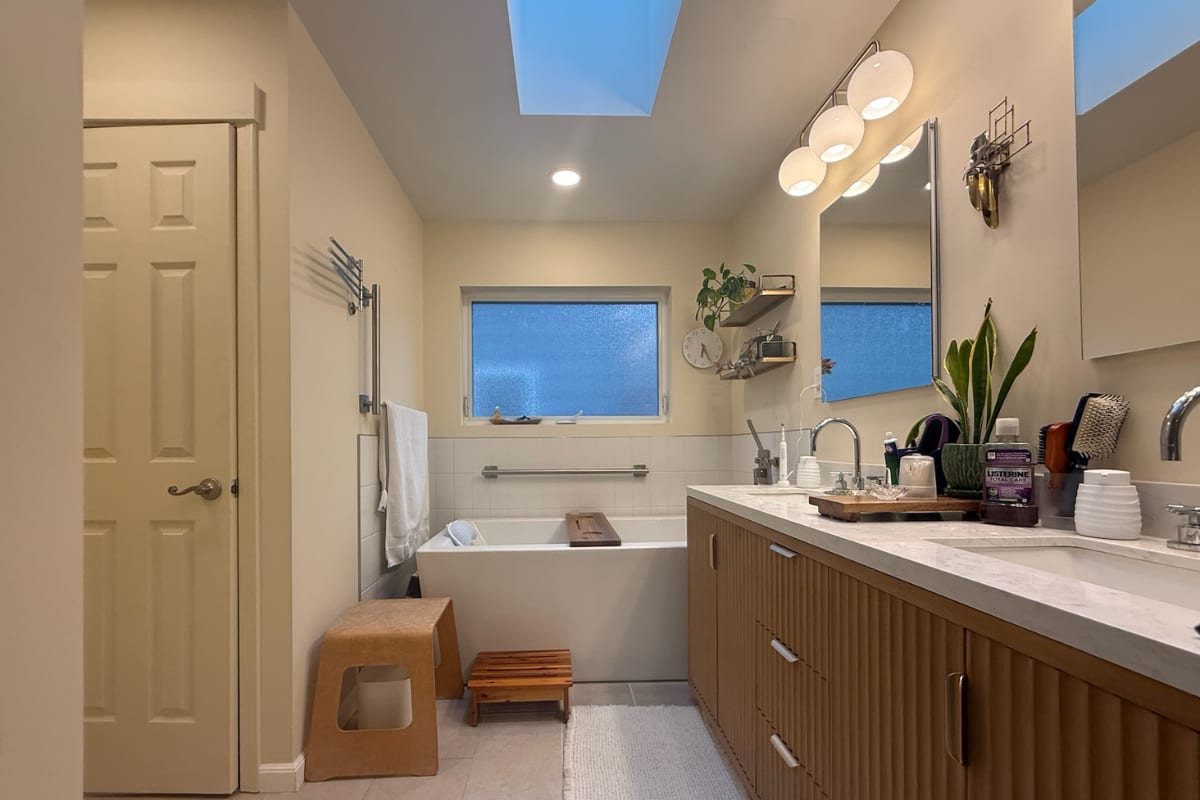
Layout discipline matters at the finish layer too. Two undermount rectangles need parallel faucet drilling, consistent front-to-back sink placement, and mirror widths that align to each basin centerline. GFCI outlets should land where they are actually reachable from the counter without landing awkwardly in mirror reflections. Lighting has to span both users: here a four-globe vanity bar bridges the pair of frameless mirrors while a skylight adds daylight so the room does not rely on cans alone.
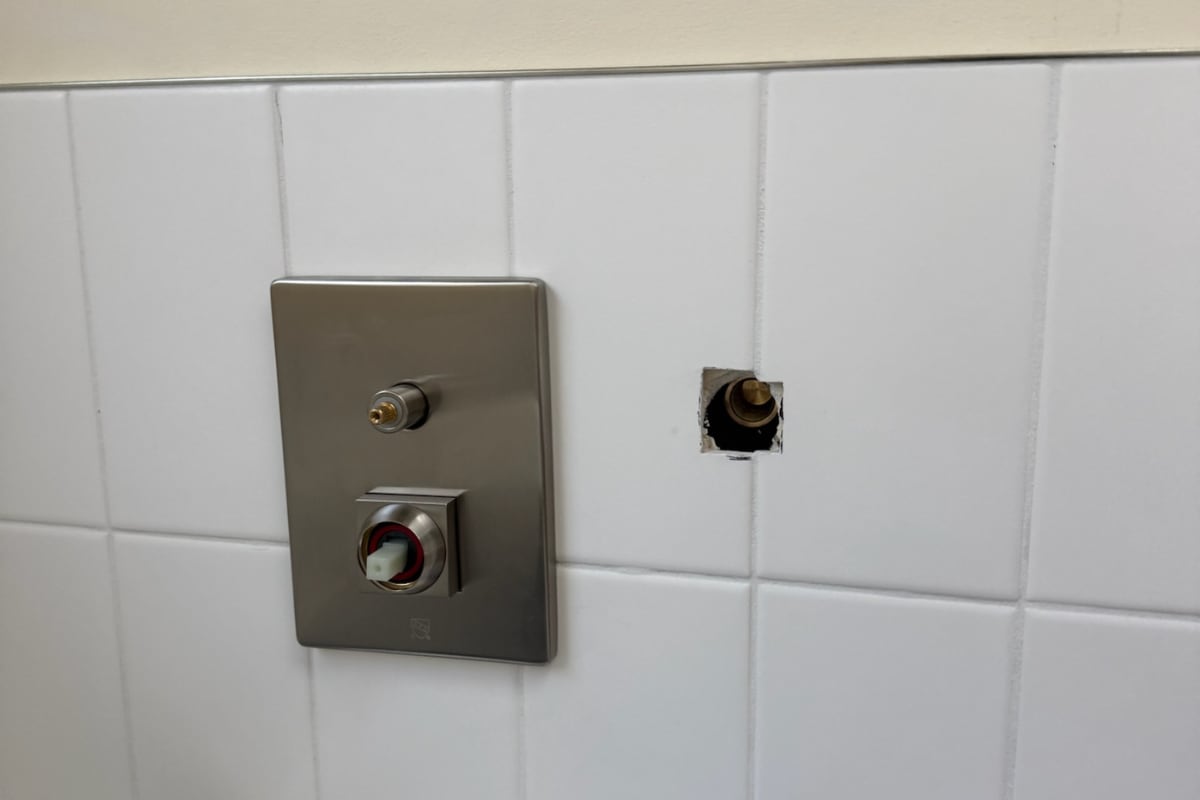
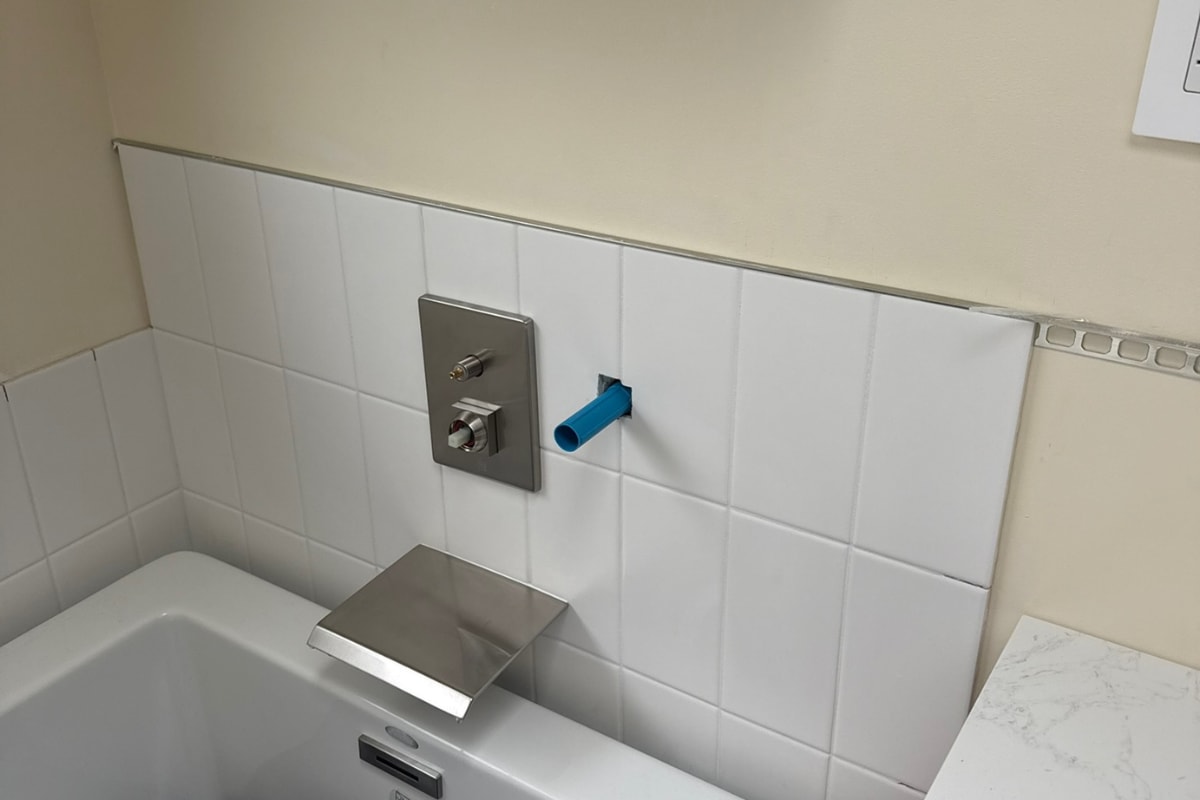
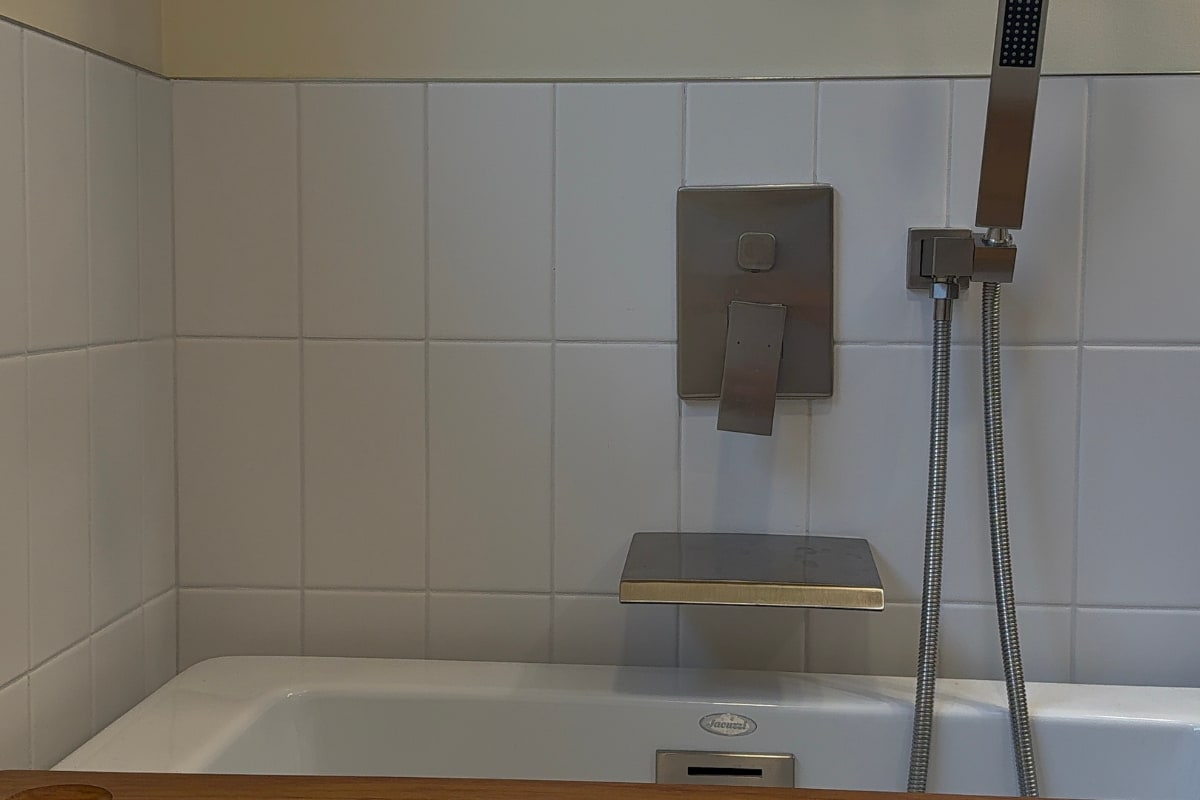
The wet wall story is intentionally quiet: white ceramic modules, light grout, brushed nickel or stainless trim plates, a waterfall-style tub spout, a single-handle mixing valve, and a wall-mounted handheld for rinsing. Vertical or stacked white tile reads contemporary and elongates the wall at the tub. Metal edge trim at the paint line is a small detail that prevents the chipped paint edge that otherwise appears six months after handoff.
Large-format neutral floor tile carries the calm palette across the room and makes the wider vanity feel grounded rather than floating in a busy pattern. A glass shower enclosure at the side of the vanity keeps sight lines open while signaling that the shower tile field was upgraded too, even though this portfolio entry emphasizes the vanity conversion.
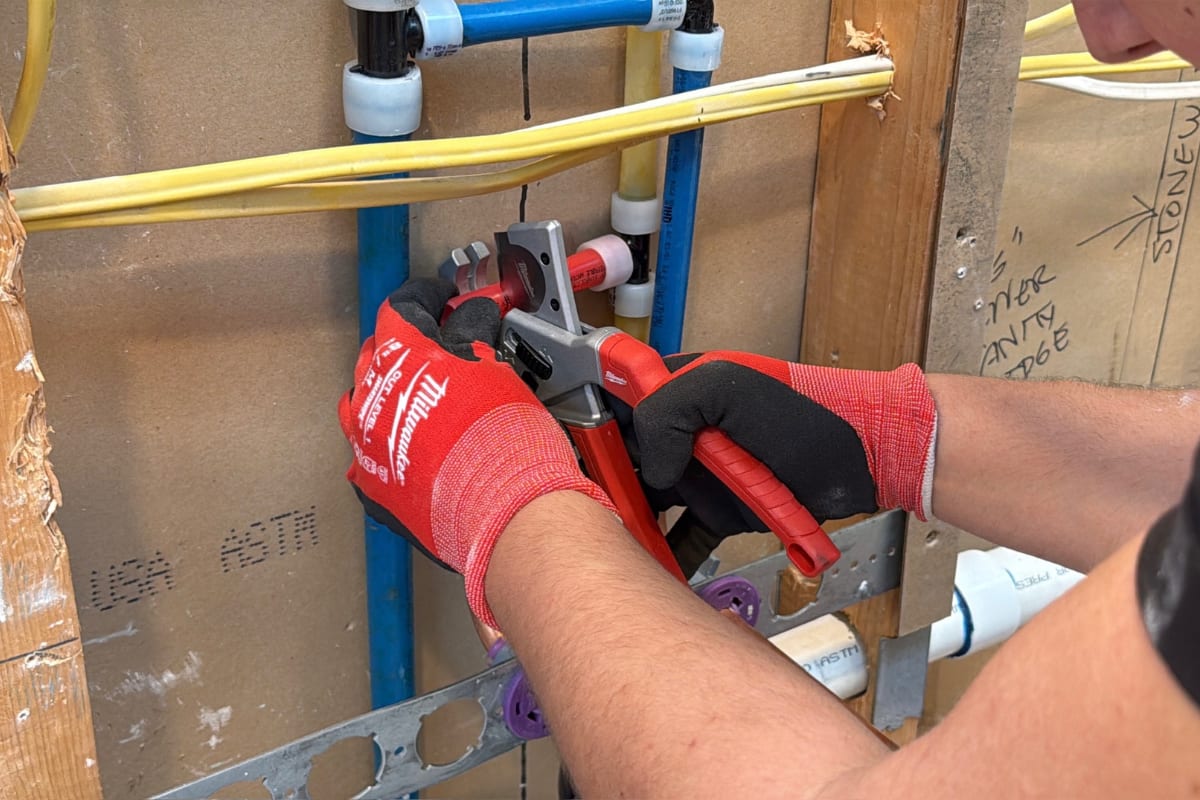
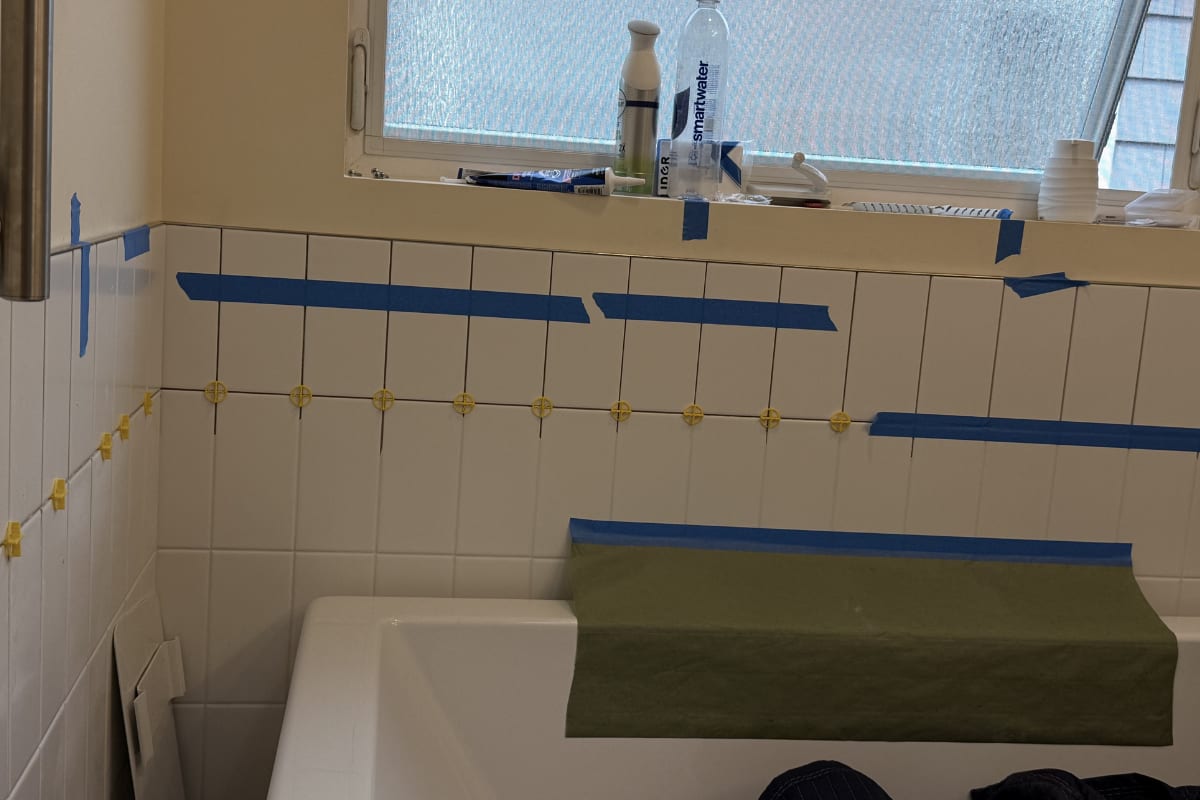
Partial does not mean sloppy sequencing. Waterproofing still precedes tile, valve depth still precedes finish plates, and medicine cabinet roughs still precede drywall patches. The in-process shots—PEX cuts, tub surround tiling with spacers and tape lines, trim plates temporarily plugged—are the evidence that the team treated the wet areas as real construction zones rather than a cosmetic refresh.
Thirty thousand dollars is believable when the room stays mostly in place but the vanity wall becomes a micro-engineering project, the tub trim is upgraded across multiple components, tile labor spans two zones, and glass is ordered to measured openings. It is not a full spa gut with steam and heated floors, and it should not be priced like one. It is the right bracket for a disciplined partial scope with professional rough-in documentation and a finish layer that photographs like a much larger job.
Ravenna’s older housing stock often has bathrooms that were generous for their era but optimized around one user at the vanity. Converting to a true double setup is one of the highest-impact changes a family can make without expanding the footprint—provided the wall behind the sinks cooperates. This project is a useful reference for that exact scenario.

 Contractor pricing
 Material coordination
 Scope planning
 Kitchen remodels
 Bathroom remodels