For homeowners comparing similar remodels, this is where the budget and schedule start to make sense: rough-in, waterproofing, sequencing, and the hidden work that protects the finished room.
This basement was not a paint-and-flooring job that happened to include a little moisture work. It was the reverse. The leak had to be solved first, and the finished rooms came after. That order matters. A basement can look clean for a few months with new trim and flooring, then fail again if the wall is still taking water.
The interior demolition told the story. Lower wall sections had to be opened where water had reached the finish layer. Wet or compromised material came out. The space had to be dried, cleaned, and checked before rebuilding. That is not glamorous work, but it is the line between a real repair and a cover-up.
The heavier scope sat outside the foundation. We trenched along the wall, exposed the exterior face, installed waterproofing, added rigid foam boards, protected the assembly with dimpled membrane, and connected the drainage strategy with a French drain. That is where the $90,000 budget makes sense. The interior finish package was visible, but the waterproofing package carried the risk, labor, and value.
Dimple membrane has a specific job. It creates a drainage space so water can move down instead of pressing directly against the foundation. Rigid foam improves the exterior wall assembly when detailed correctly. The French drain gives collected water somewhere to go. Together, those pieces manage water before it reaches the basement, which is completely different from trying to catch it after it has already crossed the wall.
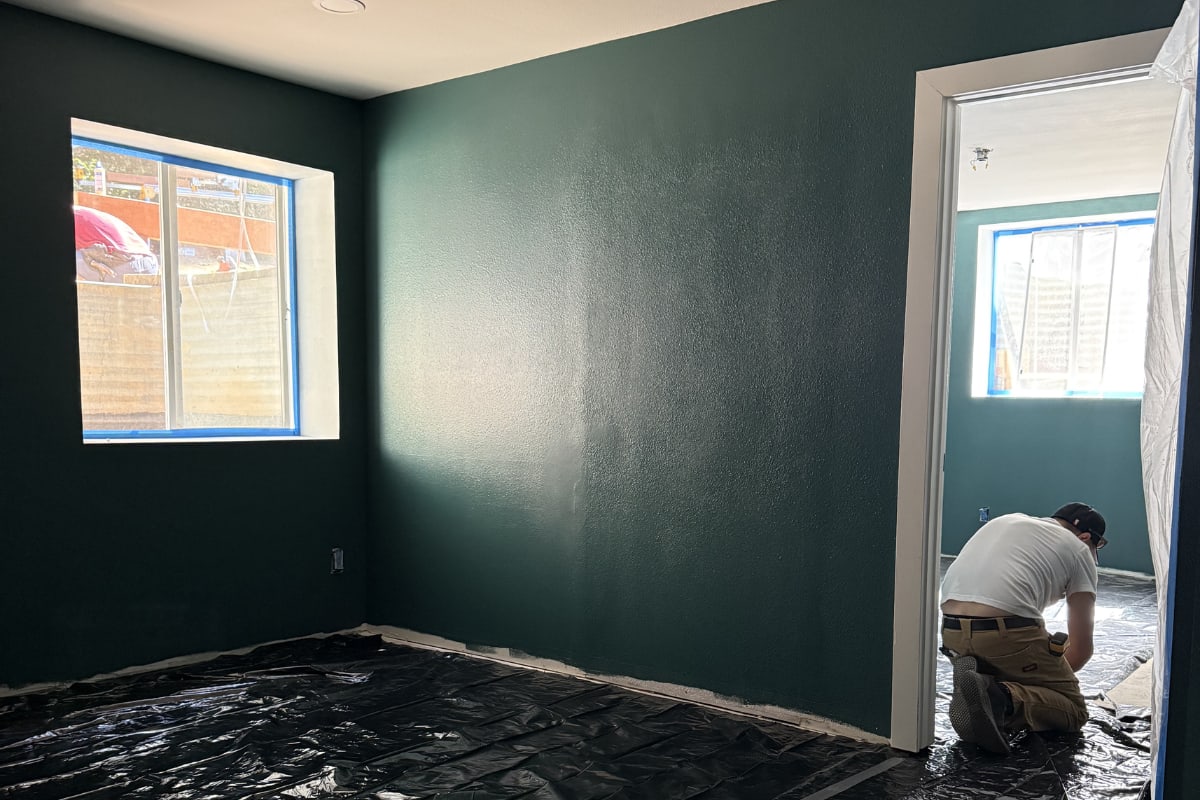
Only then did the basement become an interior finish project. Walls were painted, doors and trims were painted, baseboards went in, carpet was installed in the family area, and LVT from Lumber Liquidators / LL Flooring was used through the main rooms. LVT is a good basement choice after moisture is under control: stable, practical, easier to clean than carpet, and more forgiving below grade than hardwood. It is not a waterproofing system. It is a finish that makes sense once the waterproofing system is doing its job.
The finished space is calmer now: deep green walls, white trim, white doors, recessed lighting, LVT in traffic areas, carpet where softness matters. The important part is less visible. The wall was handled from the outside, drainage was improved, damaged material was removed, and the basement was rebuilt only after the water problem had been addressed.

 Contractor pricing
 Material coordination
 Scope planning
 Kitchen remodels
 Bathroom remodels